
 Esau Busuulwa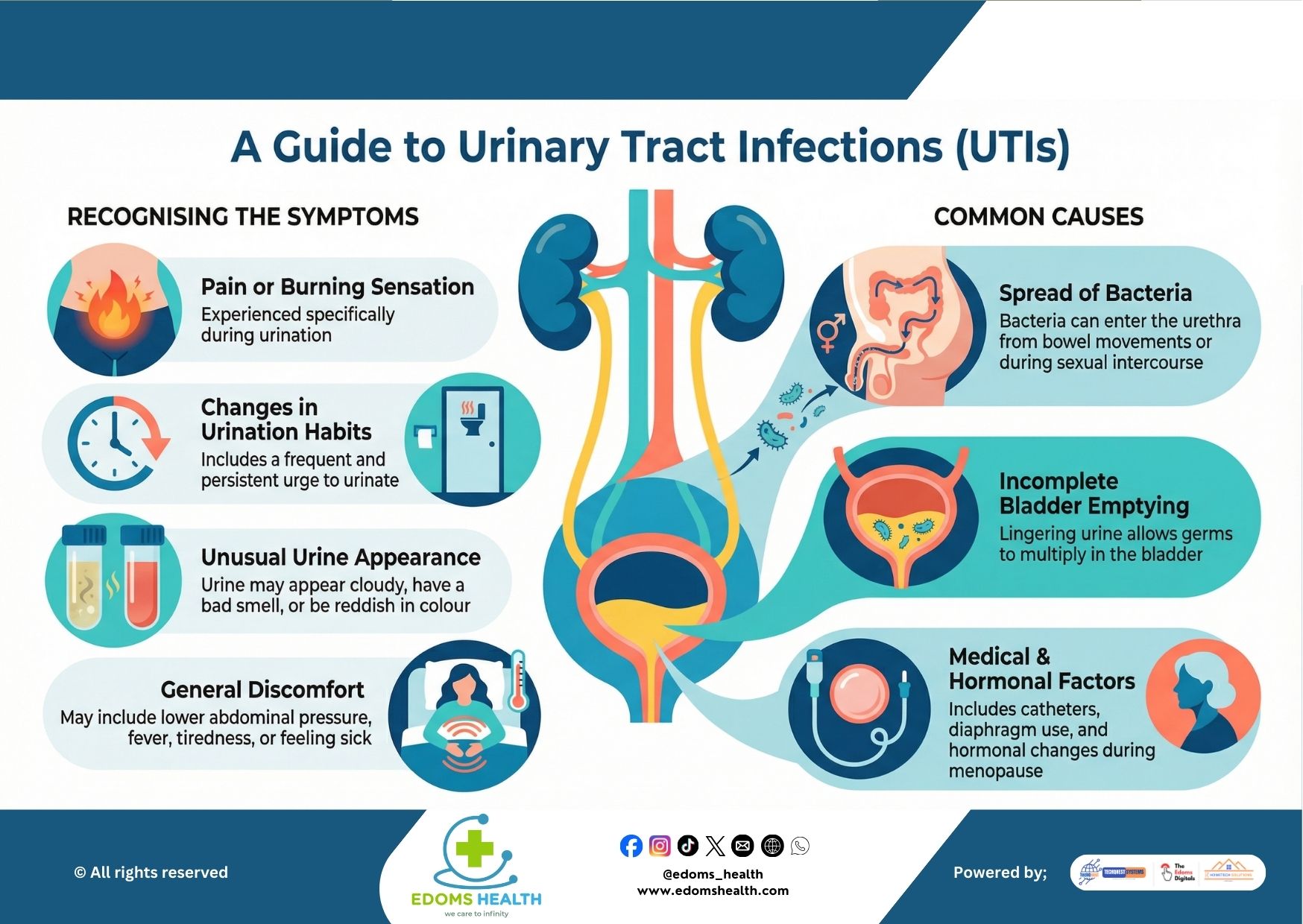
Understanding Urinary Tract Infections (UTIs): Symptoms, Causes, and Key Insights
Urinary Tract Infections (UTIs) are among the most common bacterial infections, affecting millions of people each year. While often considered a simple medical issue, they can cause significant discomfort and, if ignored, lead to more serious complications. By recognising the symptoms and understanding the common causes, you can take proactive steps towards prevention and seek timely treatment.
Recognising the Symptoms of a UTI
The signs of a UTI can range from mild and irritating to severe and debilitating. Being aware of these symptoms is the first step to getting relief.
- Pain or Burning Sensation: The most classic symptom is a sharp pain or burning feeling specifically during urination. This is often the first and most noticeable sign.
- Changes in Urination Habits: You may experience a frequent and persistent urge to urinate, even when your bladder is nearly empty. This urgency can be disruptive to daily life.
- Unusual Urine Appearance: Pay attention to your urine. A UTI can cause it to appear cloudy, develop a strong, unpleasant smell, or even take on a reddish or pink tinge indicating the presence of blood.
- General Discomfort: Beyond the urinary tract, an infection can cause more systemic symptoms. These include pressure or cramping in the lower abdomen, fever, tiredness, and a general feeling of being unwell.
What Causes a UTI?
UTIs occur when bacteria, most commonly E. coli from the digestive tract, enter the urinary system. Several factors can facilitate this:
- Spread of Bacteria: This is the primary cause. Bacteria can be transferred to the urethra from bowel movements (wiping from back to front increases this risk) or introduced during sexual intercourse.
- Incomplete Bladder Emptying: When urine doesn’t fully empty from the bladder, any bacteria present aren’t flushed out. This lingering urine becomes a breeding ground, allowing germs to multiply rapidly.
- Medical & Hormonal Factors:
- The use of urinary catheters can provide a direct pathway for bacteria.
- Diaphragms for birth control can put pressure on the urethra and bladder.
- Hormonal changes during menopause can alter the urinary tract environment, making it more susceptible to infection.
What to Do If You Suspect a UTI
If you recognise a combination of the symptoms above, it is important not to ignore them.
- Consult a Healthcare Professional: A doctor can quickly diagnose a UTI with a simple urine test. They will prescribe a course of antibiotics, which is the standard and most effective treatment.
- Stay Hydrated: Drinking plenty of water helps dilute your urine and encourages frequent urination, which can help flush bacteria from your system.
- Do Not Self-Medicate: While home remedies like unsweetened cranberry juice may offer some preventive benefits, they cannot cure an active infection. Prompt medical treatment is essential to clear the infection and prevent it from spreading to the kidneys.
Prevention Tips
You can reduce your risk of developing a UTI by:
- Wiping from front to back after using the toilet.
- Urinating soon after sexual intercourse.
- Staying well-hydrated throughout the day.
- Avoiding holding in urine for long periods.
- For post-menopausal women, discussing potential preventive options with a doctor.
Conclusion
While UTIs are common, they should not be considered a normal part of life. Understanding the clear signals your body sends—from that unmistakable burning sensation to changes in urine—empowers you to act quickly. By recognising the symptoms early and addressing the underlying causes, you can effectively manage and prevent these uncomfortable infections, ensuring better urinary and overall health.