 Esau Busuulwa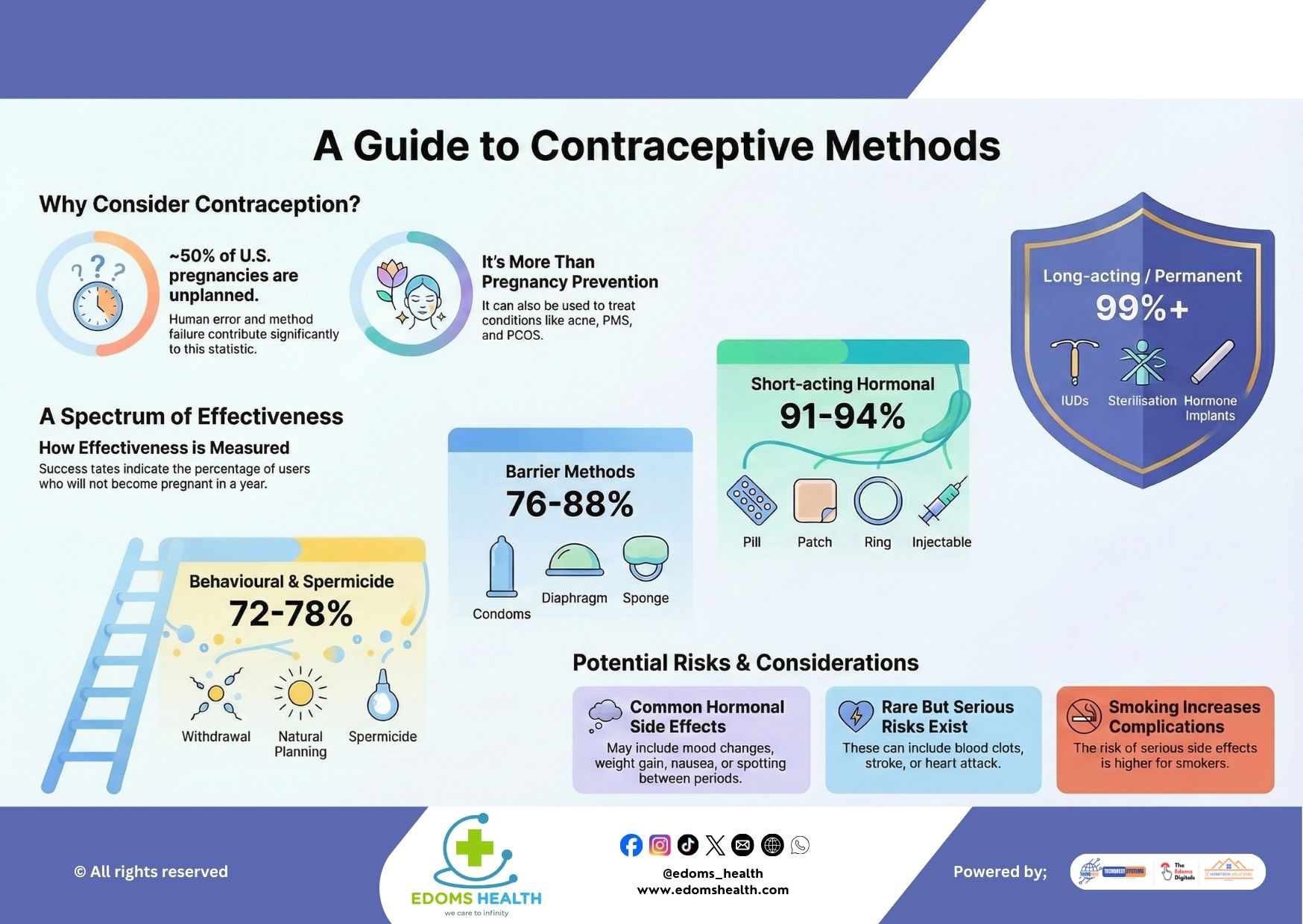
Overview
Contraception is a fundamental aspect of reproductive health, offering individuals and couples the ability to plan their families, protect their well-being, and take control of their futures. Despite its importance, unintended pregnancy remains common—nearly 50% of pregnancies in the U.S. are unplanned, often due to human error, inconsistent use, or contraceptive method failure. Choosing the right method can significantly reduce this risk while also providing additional health benefits.
Why Consider Contraception?
Beyond preventing pregnancy, contraception serves multiple health and personal purposes:
- Family planning: Allows you to decide if and when to have children.
- Health management: Some hormonal contraceptives can help treat medical conditions such as acne, polycystic ovary syndrome (PCOS), premenstrual syndrome (PMS), endometriosis, and irregular periods.
- Cycle control: Provides predictability and can reduce heavy, painful periods.
- Sexual wellness: Supports informed, consensual, and responsible sexual relationships.
Types of Contraceptive Methods
Contraceptives vary widely in mechanism, duration, efficacy, and suitability. Understanding the options can help you make an informed choice in consultation with your healthcare provider.
Long-Acting Reversible Contraceptives (LARCs) – Over 99% Effective
- Intrauterine Devices (IUDs): Small, T-shaped devices inserted into the uterus. Available in hormonal and non-hormonal (copper) forms. Effective for 3–10+ years.
- Hormone Implants: A small rod placed under the skin of the upper arm, releasing hormones to prevent pregnancy for up to 3–5 years.
Short-Acting Hormonal Methods – 91–94% Effective with Typical Use
- Birth Control Pill: Taken daily to prevent ovulation.
- Contraceptive Patch: Worn on the skin and replaced weekly.
- Vaginal Ring: Inserted monthly and releases hormones locally.
- Injectable Contraceptive (Shot): Administered every 3 months.
Barrier Methods – 76–88% Effective with Typical Use
- Condoms (Male and Female): Also protect against sexually transmitted infections (STIs).
- Diaphragm or Cervical Cap: Used with spermicide and inserted before intercourse.
- Spermicides: Available as gels, foams, or films, but most effective when combined with other barrier methods.
Permanent Methods – Over 99% Effective
- Sterilization (Tubal Ligation or Vasectomy): Surgical procedures intended to be permanent. Vasectomy is less invasive with a quicker recovery.
Fertility Awareness-Based Methods – Variable Effectiveness
- Involves tracking menstrual cycles, basal body temperature, and cervical mucus to identify fertile days. Requires commitment and consistency.
Potential Risks and Considerations
While contraceptives are generally safe for most people, it’s important to be aware of possible side effects and risks.
Common Hormonal Side Effects
- Mood changes, anxiety, or depression
- Weight gain or bloating
- Nausea or headaches
- Breast tenderness
- Spotting between periods
- Changes in libido
These often subside after a few months as the body adjusts.
Rare but Serious Risks
- Blood clots (deep vein thrombosis or pulmonary embolism)
- Stroke or heart attack, especially in those with underlying risk factors
- Increased blood pressure
- Ectopic pregnancy (rare, but possible with certain methods if pregnancy occurs)
Smoking Increases Complications
Smokers, especially those over 35, have a higher risk of serious cardiovascular side effects when using estrogen-containing contraceptives (like the pill, patch, or ring). If you smoke, discuss non-estrogen options with your healthcare provider.
How to Choose the Right Method
Selecting contraception is a personal decision. Consider:
- Health history: Certain conditions may limit your options.
- Lifestyle: How consistent you can be with a method.
- Future plans: Whether you want children soon, later, or not at all.
- STI protection: Condoms are the only method that also protect against STIs.
- Side effect tolerance: Willingness to manage potential temporary side effects.
Consult a healthcare provider to review your medical history, discuss your preferences, and choose a safe, effective method that fits your life.
Final Thoughts
Contraception is about more than preventing pregnancy—it’s about empowering choice, enhancing health, and supporting life plans. With numerous options available, there is likely a method that aligns with your body, beliefs, and lifestyle.
Take the time to learn, ask questions, and partner with your healthcare provider to make the best decision for your reproductive and overall health.
If you have concerns about side effects, effectiveness, or switching methods, schedule a consultation with your doctor or a reproductive health clinic. Your well-being is worth the conversation.