
 Esau Busuulwa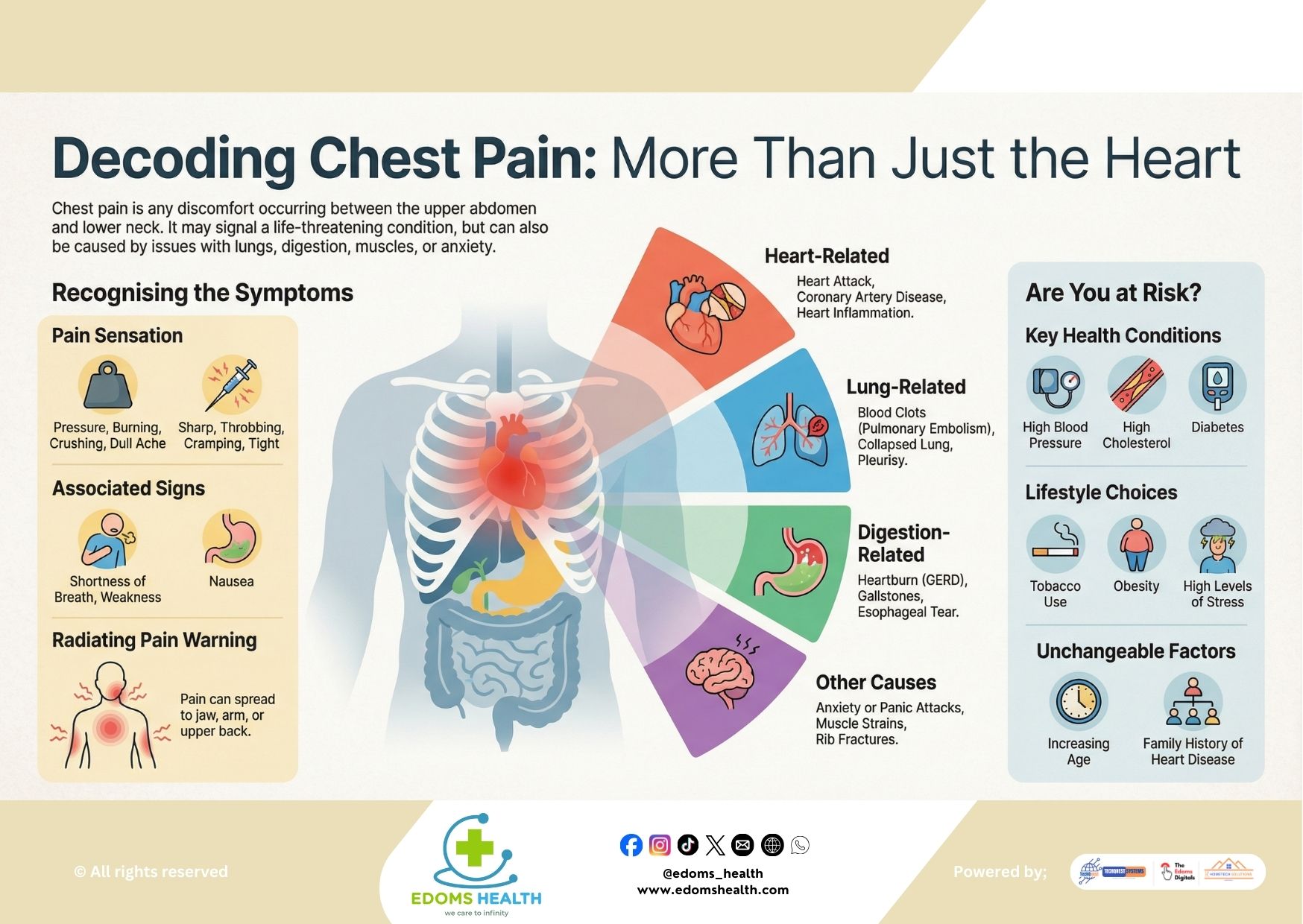
Overview
Chest pain is one of the most alarming symptoms a person can experience. It’s often immediately associated with the heart—and for good reason, since it can signal a heart attack or other serious cardiac condition. However, chest pain can also stem from a wide range of other issues involving the lungs, digestive system, muscles, or even psychological health. Understanding what your chest pain might mean, when to take it seriously, and what factors put you at risk can empower you to respond appropriately and seek timely care.
What Is Chest Pain?
Chest pain refers to any discomfort felt in the area between the upper abdomen and the lower neck. The sensation can vary widely—from a sharp, stabbing pain to a dull ache or a crushing pressure. While some causes are benign, others are medical emergencies. Recognizing the nature of the pain and any accompanying symptoms is the first step toward identifying its origin.
Recognizing the Symptoms
Chest pain can present in many ways, depending on its underlying cause.
Pain Sensation
- Pressure, squeezing, or tightness – often described as an “elephant sitting on the chest”
- Burning or indigestion-like – common in digestive issues
- Sharp, stabbing, or throbbing – may indicate lung or muscular problems
- Crushing or heavy – a classic sign of a heart attack
- Dull ache or cramping – could be musculoskeletal or related to anxiety
Associated Signs to Watch For
- Shortness of breath or difficulty breathing
- Sweating, clamminess, or dizziness
- Nausea or vomiting
- Weakness, fatigue, or feeling faint
- Pain that radiates to the jaw, neck, arm (especially the left), shoulder, or upper back
Radiating pain is a particularly important warning sign. If chest discomfort spreads to your jaw, arm, or back, it may indicate a heart-related emergency and requires immediate medical attention.
Common Causes of Chest Pain
1. Heart-Related Causes
- Heart Attack (Myocardial Infarction) – caused by a blockage in blood flow to the heart muscle
- Angina – chest pain due to reduced blood flow, often during exertion
- Pericarditis – inflammation of the sac around the heart
- Aortic Dissection – a tear in the inner layer of the aorta (a life-threatening emergency)
2. Lung-Related Causes
- Pulmonary Embolism – a blood clot in the lung
- Pneumonia or Pleurisy – infection or inflammation of the lung lining
- Collapsed Lung (Pneumothorax) – air leaks into the space between lung and chest wall
- Asthma or Bronchitis – can cause tightness and discomfort in the chest
3. Digestion-Related Causes
- Heartburn (GERD) – stomach acid backing up into the esophagus
- Gallstones or Gallbladder Issues – often cause pain in the upper abdomen or right chest
- Esophageal Spasm or Tear – can mimic heart pain
- Pancreatitis or Ulcers – may cause burning or sharp chest and abdominal pain
4. Other Causes
- Anxiety or Panic Attacks – can cause chest tightness, rapid heartbeat, and shortness of breath
- Muscle Strain or Rib Injury – from overuse, trauma, or chronic cough
- Costochondritis – inflammation of the cartilage connecting ribs to breastbone
- Shingles – if it affects chest nerves, can cause burning or shooting pain before a rash appears
Are You at Risk?
Certain health conditions and lifestyle factors can increase your likelihood of experiencing serious chest pain, especially related to the heart.
Key Health Conditions
- High blood pressure
- High cholesterol
- Diabetes
- Existing heart disease or previous heart events
Lifestyle Choices
- Tobacco use (smoking or vaping)
- Obesity or sedentary lifestyle
- High levels of chronic stress
- Excessive alcohol consumption
- Unhealthy diet high in saturated fats, salt, and sugar
Unchangeable Factors
- Increasing age (risk rises for men over 45 and women over 55)
- Family history of heart disease
- Gender (men are generally at higher risk, though heart disease is the leading cause of death in women as well)
When to Seek Emergency Help
If you or someone else experiences chest pain that is:
- Crushing, squeezing, or heavy
- Accompanied by shortness of breath, sweating, nausea, or dizziness
- Radiating to the arm, jaw, neck, or back
- Lasting more than a few minutes or coming and going
Do not wait. Call emergency services immediately. Quick action can save lives, especially during a heart attack or pulmonary embolism.
Prevention and Proactive Care
While not all chest pain can be prevented, you can reduce your risk of serious cardiac and other health issues by:
- Maintaining a heart-healthy diet and regular exercise
- Avoiding tobacco and limiting alcohol
- Managing stress through mindfulness, therapy, or relaxation techniques
- Keeping chronic conditions like hypertension, diabetes, and high cholesterol under control
- Attending regular check-ups and discussing any new or unusual symptoms with your doctor
Listen to Your Body
Chest pain should never be ignored or dismissed. Even if the cause turns out to be non-life-threatening, getting a proper evaluation provides peace of mind and ensures you receive the right care. Whether it’s your heart, your lungs, your stomach, or your mind sending a signal—pay attention. Your health is worth it.