 Esau Busuulwa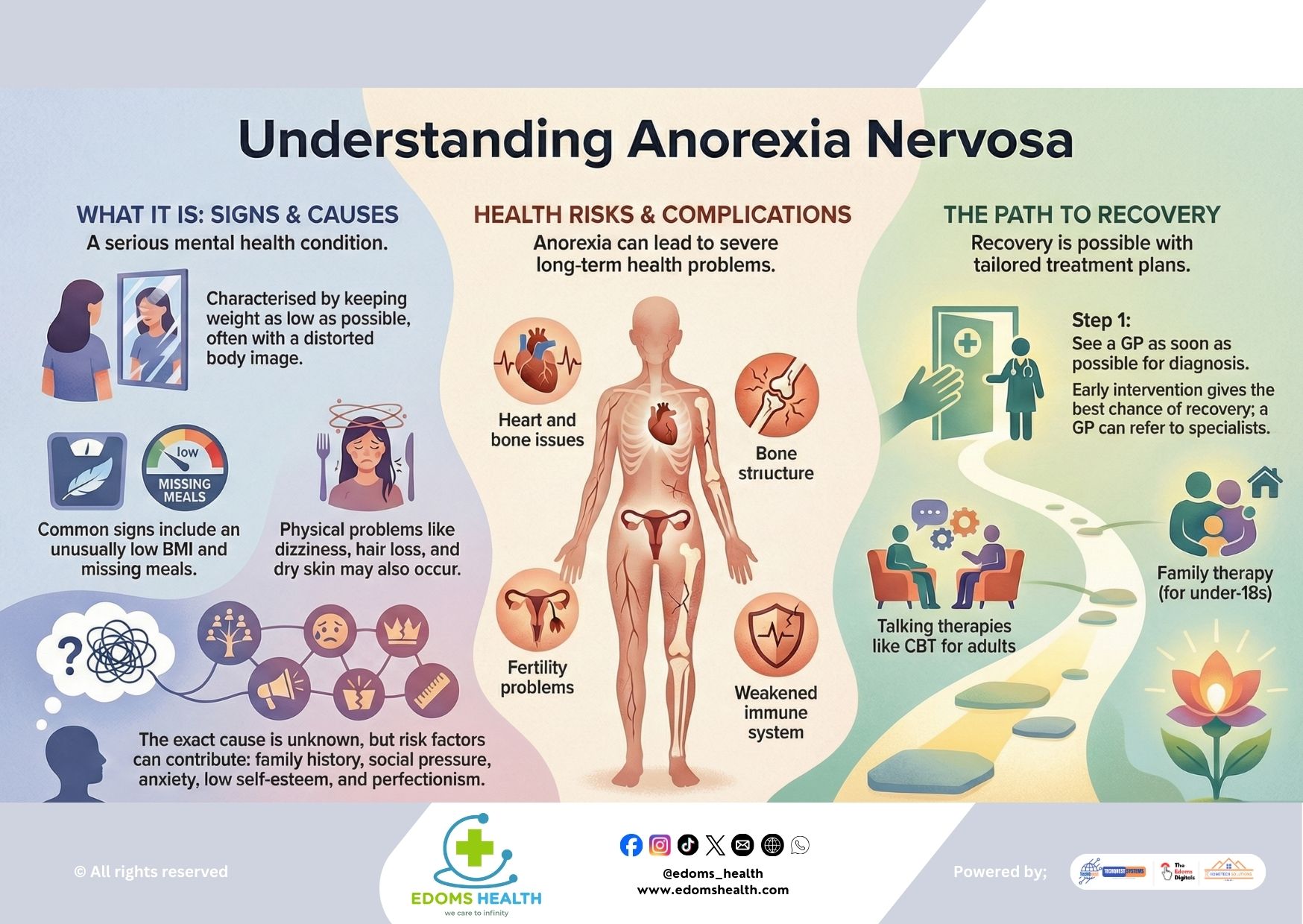
Overview
Anorexia Nervosa is a serious and complex mental health condition that extends far beyond dietary choices or weight loss. Characterized by an intense fear of gaining weight and a distorted perception of one’s own body, it leads individuals to keep their weight as low as possible through extreme means. This condition affects people of all ages, genders, and backgrounds, and understanding its signs, risks, and pathways to recovery is crucial.
What is Anorexia Nervosa? Signs and Causes
Anorexia is more than just not eating—it is a psychological disorder where self-worth becomes dangerously intertwined with body weight and shape. A distorted body image convinces the individual they are overweight even when they are medically underweight.
Key Signs to Recognize:
- Unusually low Body Mass Index (BMI) and significant weight loss
- Missing meals, strict dieting, or avoiding certain food groups
- Preoccupation with calories, food, and weight
- Physical symptoms such as dizziness, fatigue, hair loss, and dry skin
- Social withdrawal, irritability, and excessive exercise
Potential Causes and Risk Factors:
While the exact cause of anorexia is not fully understood, it is believed to arise from a combination of genetic, psychological, and environmental factors:
- Family history of eating disorders or mental health conditions
- Social and cultural pressures related to appearance and thinness
- Underlying anxiety, depression, or obsessive-compulsive traits
- Low self-esteem and perfectionistic tendencies
- Traumatic experiences or significant life changes
Health Risks and Complications
Anorexia is not only a mental health issue—it takes a severe toll on the entire body. Prolonged malnutrition and extreme weight loss can lead to life-threatening complications, including:
- Heart problems such as irregular heartbeat, low blood pressure, and heart failure
- Bone issues like osteoporosis and increased risk of fractures
- Fertility problems and hormonal imbalances
- Weakened immune system, making the body vulnerable to infections
- Organ damage, particularly to the kidneys and liver
- In severe cases, anorexia can be fatal
The Path to Recovery: Hope and Healing
Recovery from anorexia is possible, but it requires a tailored, compassionate, and often long-term approach. The journey typically begins with professional intervention and is supported by therapy, medical care, and sometimes nutritional counseling.
Step 1: Seek Professional Help
If you or someone you know is showing signs of anorexia, see a GP as soon as possible. Early diagnosis and intervention significantly improve the chances of recovery. A GP can conduct a thorough assessment, provide an initial diagnosis, and refer the individual to specialist eating disorder services.
Step 2: Specialized Treatment
Treatment plans are personalized and may include:
- Family Therapy: Particularly for individuals under 18, involving family members in therapy can help address dynamics and support recovery at home.
- Talking Therapies: For adults, Cognitive Behavioral Therapy (CBT) and other forms of psychotherapy can help challenge distorted thoughts, build healthier coping mechanisms, and improve self-image.
- Nutritional Support: Working with a dietitian to restore healthy eating patterns and weight in a safe, supervised manner.
- Medical Monitoring: Regular check-ups to address physical health complications and ensure stability during recovery.
You Are Not Alone
Anorexia is a challenging condition, but with the right support, individuals can regain their health and rebuild their relationship with food and their body. Recovery is not just about weight restoration—it’s about healing the mind, rediscovering self-worth, and reclaiming a fulfilling life.
If you or someone close to you is struggling, remember: reaching out for help is a sign of strength, not weakness. Speaking to a GP or a trusted healthcare professional is the first, most important step toward hope and healing.