
 Esau Busuulwa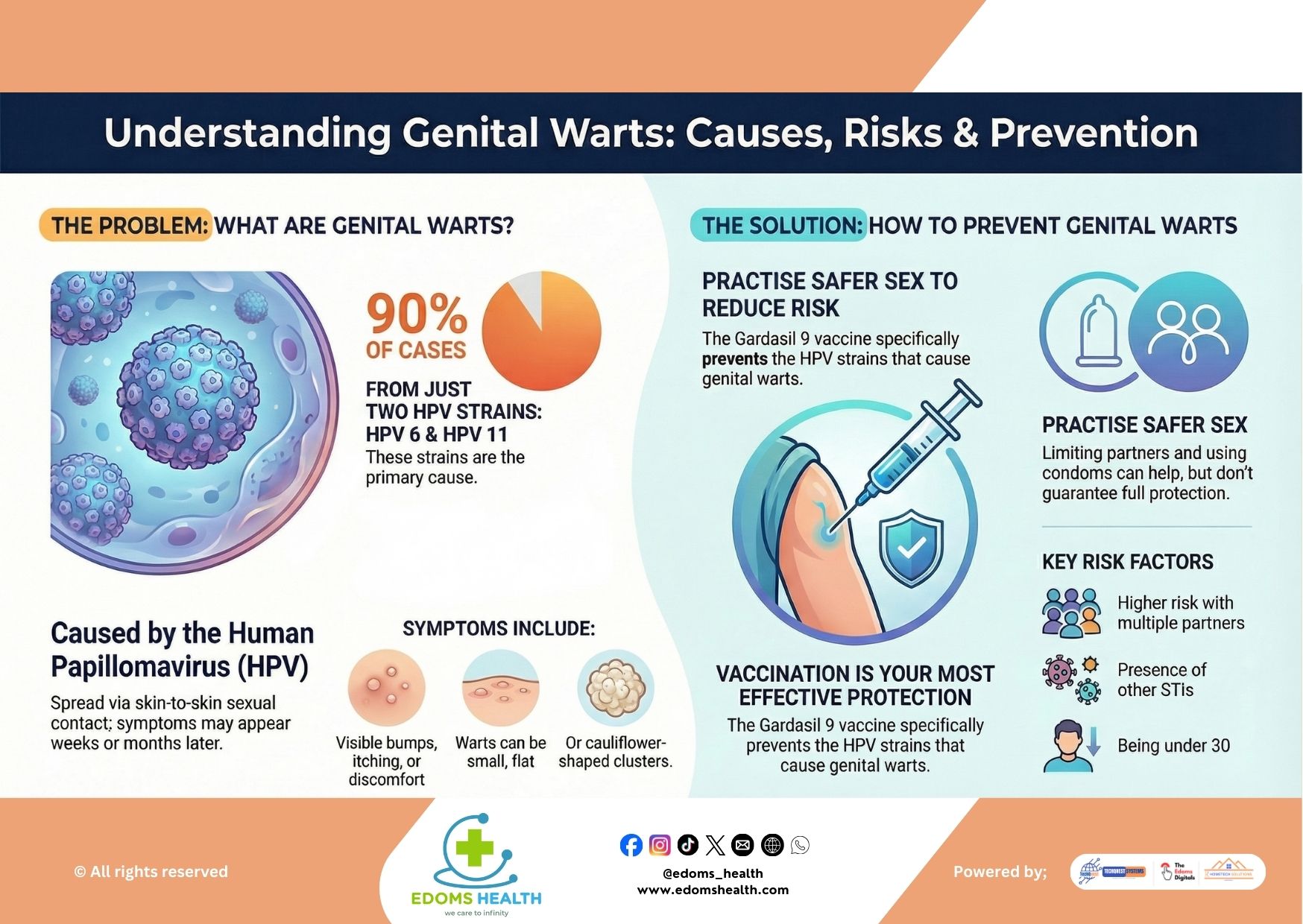
Genital warts are one of the most common sexually transmitted infections (STIs) worldwide. Caused by certain strains of the Human Papillomavirus (HPV), they can affect anyone who is sexually active. While often not dangerous, genital warts can cause discomfort, anxiety, and social stigma. Understanding how they spread, recognizing symptoms, and knowing how to prevent them are essential steps in protecting your sexual health.
What Are Genital Warts?
Genital warts are small growths or bumps that appear on or around the genitals, anus, or sometimes the mouth and throat. They are caused by specific strains of HPV—a virus so common that nearly all sexually active people will contract some form of HPV in their lifetime. However, only a few strains lead to visible warts.
Key Fact: 90% of genital wart cases are caused by just two low-risk HPV strains: HPV 6 and HPV 11. Unlike high-risk HPV strains that can lead to cervical, anal, or oral cancers, these strains primarily cause warts and do not typically lead to cancer.
How Are Genital Warts Spread?
Genital warts are transmitted through skin-to-skin sexual contact—this includes vaginal, anal, and oral sex. The virus can spread even when warts are not visible, and symptoms may take weeks, months, or even years to appear after exposure. This makes it possible to transmit HPV unknowingly.
Symptoms to Look For
Not everyone with HPV 6 or 11 will develop visible warts. When they do appear, symptoms may include:
- Small, flesh-colored or gray bumps in the genital or anal area
- Clusters that resemble cauliflower in shape and texture
- Itching, burning, or discomfort
- Bleeding during or after intercourse (if warts are irritated)
Warts can vary in size and number—some may be so small they go unnoticed, while others can grow into larger clusters.
Key Risk Factors
Certain factors can increase your likelihood of developing genital warts:
- Multiple sexual partners
- Younger age (most common in people under 30)
- Having other STIs, which may indicate higher-risk sexual behavior
- Weakened immune system
- Not being vaccinated against HPV
Prevention: Your Best Defense
1. Vaccination
The most effective way to prevent genital warts is through HPV vaccination. The Gardasil 9 vaccine protects against HPV 6 and 11—the two strains responsible for most warts—as well as seven high-risk strains linked to cancer.
- Recommended for both males and females, ideally before becoming sexually active (ages 11–12)
- Can be given up to age 45 after discussion with a healthcare provider
- Vaccination does not treat existing HPV infections or warts but prevents new ones
2. Practice Safer Sex
While condoms and dental dams can reduce the risk of HPV transmission, they do not offer complete protection because HPV can infect areas not covered by barriers. Additional precautions include:
- Limiting your number of sexual partners
- Open communication with partners about STI testing and sexual health
- Regular STI screenings, even if no symptoms are present
Diagnosis and Treatment
If you notice any unusual bumps or skin changes, see a healthcare provider. Diagnosis is usually made through a visual exam, and sometimes a biopsy may be taken.
Treatment focuses on removing warts and managing symptoms, but it does not eliminate the HPV virus itself. Options include:
- Topical creams prescribed by a doctor
- Cryotherapy (freezing off warts)
- Laser therapy or surgical removal
- Electrocautery (burning warts)
Even after treatment, warts may recur, and the virus can remain dormant in the body.
Living with HPV
A diagnosis of genital warts can be emotionally challenging, but it’s important to remember:
- HPV is extremely common and not a reflection of personal character or hygiene
- Genital warts caused by HPV 6 and 11 are not cancer-causing
- With treatment, warts can be managed effectively
- Honest conversations with sexual partners and healthcare providers are key to care and prevention
Take Control of Your Sexual Health
Genital warts are a manageable condition, and prevention is within reach. By getting vaccinated, practicing safer sex, and staying informed, you can significantly reduce your risk and protect your long-term health.
If you suspect you have genital warts or want to learn more about HPV vaccination, schedule an appointment with your doctor or a sexual health clinic.