
 Esau Busuulwa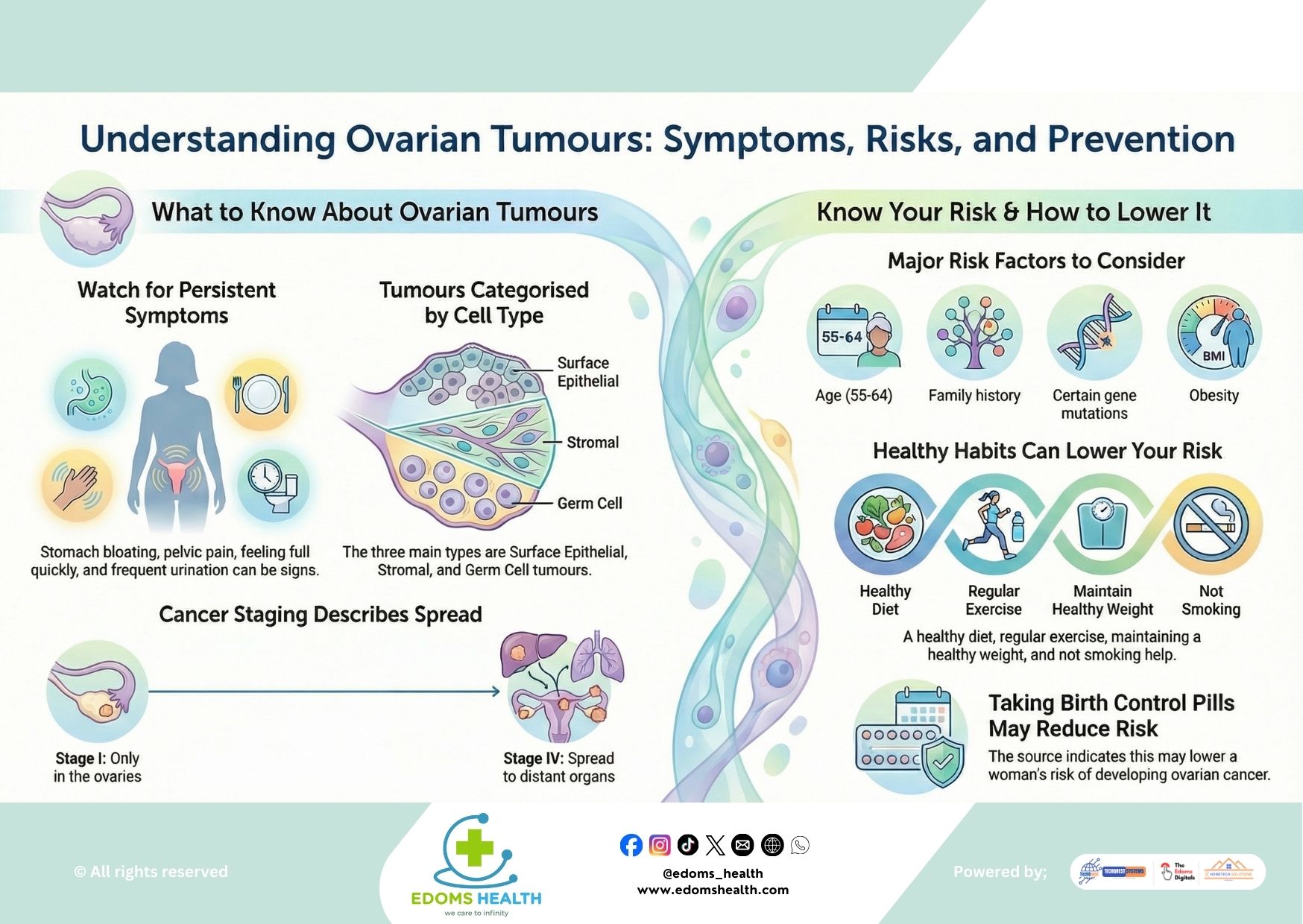
Ovarian tumors are abnormal growths that can develop in one or both ovaries. They can be benign (non-cancerous), malignant (cancerous), or borderline (having low malignant potential). Often called a “silent” disease because early symptoms can be subtle, awareness and timely detection are key to improving outcomes. This guide covers what ovarian tumors are, how to recognize potential signs, their risk factors, and steps you can take to reduce your risk.
What to Know About Ovarian Tumors
Types of Ovarian Tumors
Tumors are categorized based on the type of ovarian cell from which they originate:
- Surface Epithelial Tumors – Arise from the outer lining of the ovary. These account for about 90% of ovarian cancers.
- Stromal Tumors – Develop from the hormone-producing tissue of the ovary. They can produce hormones that cause symptoms such as abnormal bleeding.
- Germ Cell Tumors – Originate from the egg-producing cells. These are more common in younger women and are often treatable.
Watch for Persistent Symptoms
Early-stage ovarian tumors may not cause noticeable symptoms, but as they grow, they can lead to:
- Persistent bloating or abdominal swelling
- Pelvic or abdominal pain
- Feeling full quickly or difficulty eating
- Urinary urgency or frequency without infection
- Changes in bowel habits (constipation or diarrhea)
- Fatigue
- Unexplained weight loss (in advanced cases)
If these symptoms are new, persistent, and occur almost daily for more than a few weeks, consult a healthcare provider.
Staging of Ovarian Cancer
If a tumor is cancerous, doctors use a staging system to describe how far it has spread:
- Stage I: Cancer is confined to one or both ovaries.
- Stage II: Cancer has spread to other pelvic organs.
- Stage III: Cancer has spread to the abdomen or lymph nodes.
- Stage IV: Cancer has spread to distant organs, such as the liver or lungs.
Know Your Risk & How to Lower It
Major Risk Factors
While ovarian tumors can affect anyone with ovaries, certain factors may increase risk:
- Age: Most common in women aged 55–64, though some types occur in younger individuals.
- Family history of ovarian, breast, or colorectal cancer.
- Inherited gene mutations, such as BRCA1 or BRCA2.
- Personal history of breast, uterine, or colorectal cancer.
- Obesity.
- Endometriosis.
- Never having been pregnant or having children later in life.
- Hormone replacement therapy (especially long-term estrogen use).
Protective Factors & Prevention
You can reduce your risk through healthy lifestyle choices and, in some cases, medical prevention:
- Regular Exercise: Helps maintain a healthy weight and hormone balance.
- Healthy Diet: Emphasize fruits, vegetables, whole grains, and lean proteins.
- Maintain a Healthy Weight: Obesity is linked to increased ovarian cancer risk.
- Avoid Smoking: Smoking is associated with certain types of ovarian tumors.
- Birth Control Pills: Long-term use of oral contraceptives can significantly lower the risk of ovarian cancer.
- Pregnancy and Breastfeeding: May offer some protective effect.
- Genetic Counseling & Testing: If you have a strong family history of ovarian or breast cancer, consider speaking with a genetic counselor about testing and preventive options.
Diagnosis and Treatment
If ovarian cancer is suspected, your doctor may recommend:
- Pelvic exam
- Imaging tests (ultrasound, CT, or MRI)
- Blood tests (such as CA-125)
- Biopsy or surgery for definitive diagnosis
Treatment depends on the type, stage, and overall health, and may include:
- Surgery (often to remove the ovaries, fallopian tubes, and uterus)
- Chemotherapy
- Targeted therapy or immunotherapy
- Hormone therapy (for certain stromal tumors)
Be Your Own Advocate
Ovarian tumors are often diagnosed at later stages because symptoms can be vague and overlooked. Listening to your body and speaking up about persistent changes is crucial. Whether you are at increased risk or simply proactive about your health, knowing what to watch for and taking preventive steps can make all the difference.
If you experience persistent symptoms or have a family history of ovarian cancer, schedule a consultation with your gynecologist. Early detection saves lives.
Your health is your greatest asset. Stay informed, stay aware, and take action for your well-being.