
 Esau Busuulwa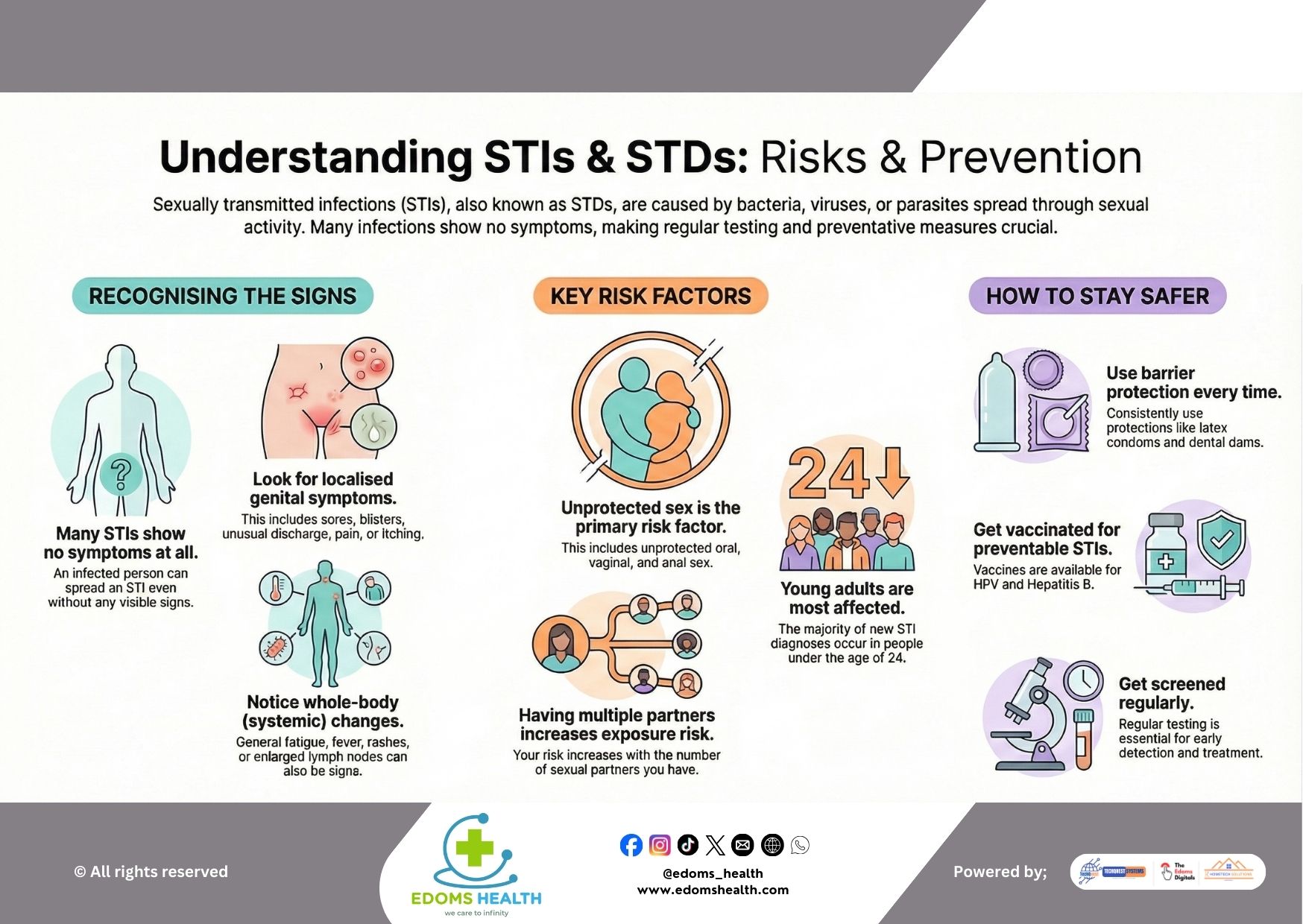
Sexually transmitted infections (STIs), also known as sexually transmitted diseases (STDs), are infections caused by bacteria, viruses, or parasites that are spread through sexual contact. They affect millions of people worldwide, regardless of age, gender, or background. Because many STIs present no symptoms at all, regular testing and informed prevention are essential for sexual health and well-being.
What Are STIs & STDs?
STIs are infections transmitted through vaginal, anal, or oral sex, and sometimes through close intimate contact. While some infections are easily treated, others can lead to serious long-term health issues if left undiagnosed, including infertility, chronic pain, and increased risk of certain cancers.
Recognizing the Signs
Many STIs are “silent,” meaning they show no obvious symptoms, especially in the early stages. This makes it possible to unknowingly transmit an infection to a partner. When symptoms do appear, they can vary widely depending on the infection.
Localized Genital Symptoms:
- Sores, bumps, or blisters on or around the genitals, anus, or mouth
- Unusual discharge from the vagina, penis, or anus
- Burning or pain during urination
- Itching, redness, or irritation in the genital area
- Bleeding between periods or after sex (in women)
Whole-Body (Systemic) Symptoms:
- Fever or chills
- Fatigue
- Swollen lymph nodes, especially in the groin
- Rash on the body, hands, or feet
- Joint pain
- Weight loss
If you notice any of these symptoms—or if you’ve had unprotected sex—it’s important to get tested.
Key Risk Factors
Certain behaviors and circumstances can increase your risk of contracting an STI:
- Unprotected sex (without condoms or dental dams) during vaginal, anal, or oral intercourse
- Having multiple sexual partners
- A history of STIs (some infections can recur)
- Using alcohol or drugs before sex, which may lower inhibitions and lead to riskier behavior
- Sharing needles or other drug-injection equipment (for infections like HIV or Hepatitis B and C)
- Being a young adult (individuals aged 15–24 account for half of all new STI cases)
How to Stay Safer: Prevention Is Possible
1. Use Barrier Protection Every Time
- Condoms (internal or external) are highly effective at reducing the transmission of many STIs when used consistently and correctly.
- Dental dams can provide protection during oral sex.
- Remember that while condoms greatly reduce risk, they do not eliminate it entirely—some infections, like herpes or HPV, can be spread through skin-to-skin contact in areas not covered by a condom.
2. Get Vaccinated
- HPV vaccine (Gardasil 9) protects against the strains of human papillomavirus most likely to cause genital warts and cervical, anal, and other cancers.
- Hepatitis B vaccine prevents hepatitis B infection, which can be sexually transmitted.
- Talk to your healthcare provider about recommended vaccinations based on your age and health.
3. Get Screened Regularly
- Routine testing is crucial, especially if you are sexually active with new or multiple partners.
- Many STIs can be detected through simple urine tests, blood tests, or swabs.
- Talk openly with your partner(s) about testing and sexual health before becoming intimate.
4. Practice Mutual Monogamy or Reduce Partner Number
- Being in a mutually monogamous relationship with a partner who has tested negative for STIs lowers your risk.
- Limiting your number of sexual partners can reduce exposure.
5. Avoid Douching
- Douching can disrupt the natural balance of vaginal bacteria and increase the risk of infections like bacterial vaginosis.
6. Don’t Share Needles or Personal Items
- Use sterile needles if you inject drugs, and never share needles, syringes, or razors.
What to Do If You Think You Have an STI
- Get tested as soon as possible. Many clinics offer confidential, low-cost, or free testing.
- Complete all prescribed treatment, even if symptoms disappear.
- Inform recent sexual partners so they can also get tested and treated if necessary.
- Avoid sexual contact until you and your partner(s) have completed treatment and been cleared by a healthcare provider.
Ending the Stigma
STIs are common and nothing to be ashamed of. Open, honest communication with partners and healthcare providers is key to prevention, early detection, and treatment. Taking responsibility for your sexual health is a sign of self-respect and care for others.
If you’re sexually active, make STI screening a regular part of your healthcare routine. Knowing your status empowers you to protect yourself and those you care about.
Your sexual health matters. Stay informed, stay protected, and stay proactive.