
 Esau Busuulwa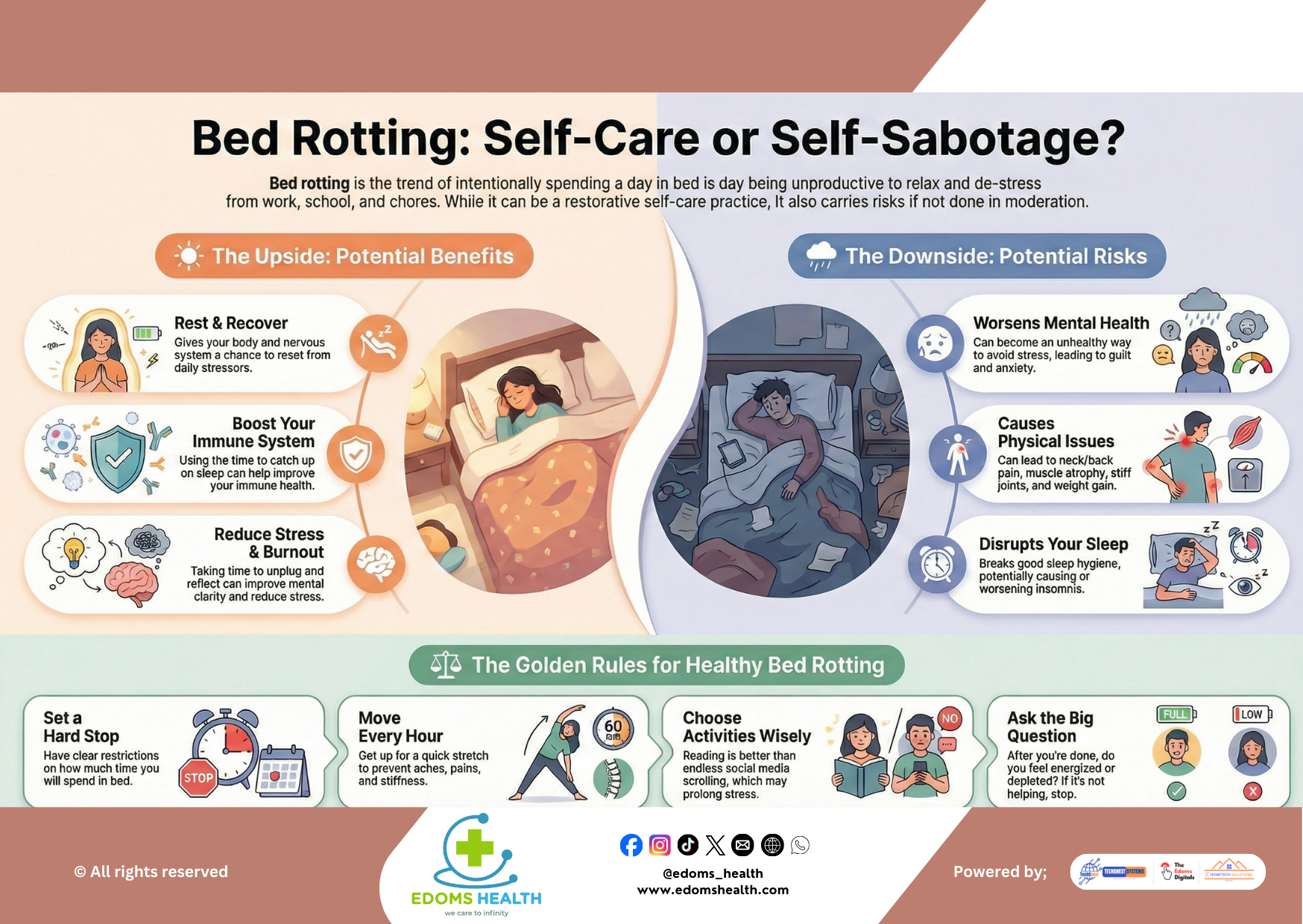
In an era defined by relentless productivity, constant connectivity, and the glorification of “hustle culture,” a quiet rebellion is brewing under our blankets. Enter “bed rotting” — the intentional, often prolonged, act of spending an entire day (or significant portions of it) in bed, doing little more than resting, scrolling, watching shows, or simply being still. It’s not about illness; it’s about escape. But is this trend a necessary form of self-care, or a slippery slope into self-sabotage
This article dives deep into the phenomenon of bed rotting — its origins, its psychological roots, its potential benefits, its hidden dangers, and how to practice it mindfully so it serves you, rather than harms you.
What Is Bed Rotting?
Bed rotting is the conscious decision to spend a full day (or extended period) in bed, deliberately avoiding work, chores, social obligations, and even basic daily routines — not because you’re sick, but because you’re emotionally, mentally, or physically exhausted. The goal is typically to decompress, recharge, and escape the pressures of modern life.
It’s distinct from depression-induced lethargy or chronic fatigue syndrome. Bed rotting is often chosen, sometimes even ritualized — think cozy pajamas, favorite snacks, curated playlists, and a stack of comfort shows. It’s the ultimate “pause button” for overworked minds and bodies.
The term gained traction on social media platforms like TikTok and Instagram, where users share their “bed rotting days” as acts of radical self-compassion. But as with any trend that goes viral, it’s worth examining whether it’s truly beneficial — or if it’s masking deeper issues.
The Upside: Potential Benefits of Bed Rotting
When practiced intentionally and in moderation, bed rotting can offer genuine restorative benefits:
1. Rest & Recover
Your body and nervous system are constantly bombarded by stressors — deadlines, notifications, traffic, social expectations. A dedicated day of rest allows your sympathetic nervous system (“fight-or-flight”) to switch off and your parasympathetic system (“rest-and-digest”) to activate. This physiological reset can lower cortisol levels, reduce inflammation, and improve overall resilience.
Think of it as hitting the “reset” button on your internal operating system.
2. Boost Your Immune System
Sleep is foundational to immune function. While bed rotting isn’t always synonymous with sleep, the reduction in physical and mental activity gives your body the bandwidth to repair cells, produce cytokines, and strengthen defenses against pathogens. Chronic stress suppresses immunity — giving yourself permission to rest can reverse that.
3. Reduce Stress & Burnout
Burnout isn’t just exhaustion — it’s emotional detachment, cynicism, and a sense of inefficacy. Bed rotting provides a safe space to unplug, reflect, and process emotions without external demands. Journaling, meditating, or simply allowing your thoughts to wander can foster mental clarity and emotional release.
Sometimes, the most productive thing you can do is nothing at all.
The Downside: Potential Risks of Unchecked Bed Rotting
But like any good thing taken to excess, bed rotting can quickly turn from self-care into self-sabotage:
1. Worsens Mental Health
What starts as a healthy break can become an avoidance tactic. If you’re using bed rotting to escape responsibilities, relationships, or difficult emotions, it may lead to guilt, shame, and increased anxiety. Over time, this can reinforce feelings of inadequacy or helplessness — the very things you were trying to escape.
Avoidance is not healing. It’s postponement — often with interest.
2. Causes Physical Issues
Lying in bed for hours on end without movement can lead to:
- Neck and back pain
- Muscle atrophy and stiffness
- Poor circulation
- Weight gain due to reduced metabolic activity
- Disrupted circadian rhythms
Your body is designed to move — even gentle stretching or walking around the room can mitigate these effects.
3. Disrupts Your Sleep Hygiene
Paradoxically, spending too much time in bed during the day can confuse your brain about when it’s actually time to sleep. This can lead to insomnia, fragmented sleep, or difficulty falling asleep at night — undermining the very rest you sought.
The Golden Rules for Healthy Bed Rotting
To ensure your bed rotting day is restorative — not destructive — follow these four golden rules:
✅ 1. Set a Hard Stop
Don’t let “just one more episode” turn into a 14-hour marathon. Decide in advance how long you’ll allow yourself to bed rot — whether it’s 8 hours, a full day, or even half a day. Use alarms or calendar reminders to enforce boundaries. This prevents the slide into inertia and helps you re-enter your routine with intention.
Boundaries aren’t barriers — they’re bridges to sustainable well-being.
✅ 2. Move Every Hour
Even if it’s just 5 minutes of stretching, yoga, or walking around your room — get up. Movement improves circulation, reduces muscle stiffness, and boosts mood through endorphin release. Set a timer if you need to. Think of it as “movement breaks” — like you’d take for your eyes or posture while working.
Your body doesn’t need a gym — it needs motion.
✅ 3. Choose Activities Wisely
Not all downtime is created equal. Passive scrolling on social media can leave you feeling more drained than energized. Instead, opt for:
- Reading a book or listening to an audiobook
- Journaling or doodling
- Listening to calming music or podcasts
- Practicing mindfulness or guided meditation
- Watching uplifting or nostalgic films
Avoid doomscrolling, comparison-driven content, or anything that triggers anxiety or FOMO.
What you consume in rest matters as much as what you consume in meals.
✅ 4. Ask the Big Question
At the end of your bed rotting day, ask yourself:
“After I’ve rested, do I feel energized, refreshed, and ready to engage — or depleted, guilty, and worse than before?”
If the answer is the latter, it’s time to reassess. Was this truly self-care — or self-numbing? If bed rotting leaves you feeling worse, it’s a signal to explore deeper issues — perhaps with a therapist, coach, or trusted friend.
True rest restores. False rest depletes.
When Bed Rotting Becomes a Problem
Bed rotting becomes concerning when it:
- Replaces regular responsibilities consistently
- Leads to isolation or withdrawal from social connections
- Is accompanied by feelings of guilt, shame, or hopelessness
- Interferes with sleep, appetite, or hygiene
- Feels compulsive or out of control
If you find yourself relying on bed rotting as your primary coping mechanism, or if it’s becoming a pattern rather than a pause, it may be time to seek professional support. Therapy can help uncover underlying causes — such as burnout, anxiety, depression, or trauma — and develop healthier coping strategies.
Alternatives to Bed Rotting: Gentle Rest Without the Risk
If bed rotting feels risky or unproductive for you, consider these alternatives for restful recovery:
- Nature immersion: Spend time outdoors — walk in a park, sit by water, or simply lie on grass.
- Creative downtime: Paint, write, knit, or cook — activities that engage your hands and calm your mind.
- Digital detox: Turn off devices and enjoy silence, reading, or conversation.
- Napping strategically: 20–30 minute power naps can boost alertness without disrupting nighttime sleep.
- Micro-rests: Take 5-minute breaks every hour to breathe, stretch, or gaze out a window.
Final Thoughts: Rest Is Not Laziness — But It’s Not a Cure-All Either
Bed rotting reflects a cultural cry for relief — a recognition that we are not machines, and that rest is not optional. In a world that equates busyness with worth, choosing to rest is revolutionary.
But true self-care is not about escaping reality — it’s about returning to it with greater strength, clarity, and compassion. Used wisely, bed rotting can be a powerful tool for recovery. Used recklessly, it can become a cage.
So go ahead — pull up the covers, grab your favorite blanket, and give yourself permission to pause. Just remember: set your alarm, stretch your limbs, choose your distractions wisely, and ask yourself — did this truly restore me?
Because the goal isn’t to stay in bed forever. It’s to return to life — fully charged.