 Esau Busuulwa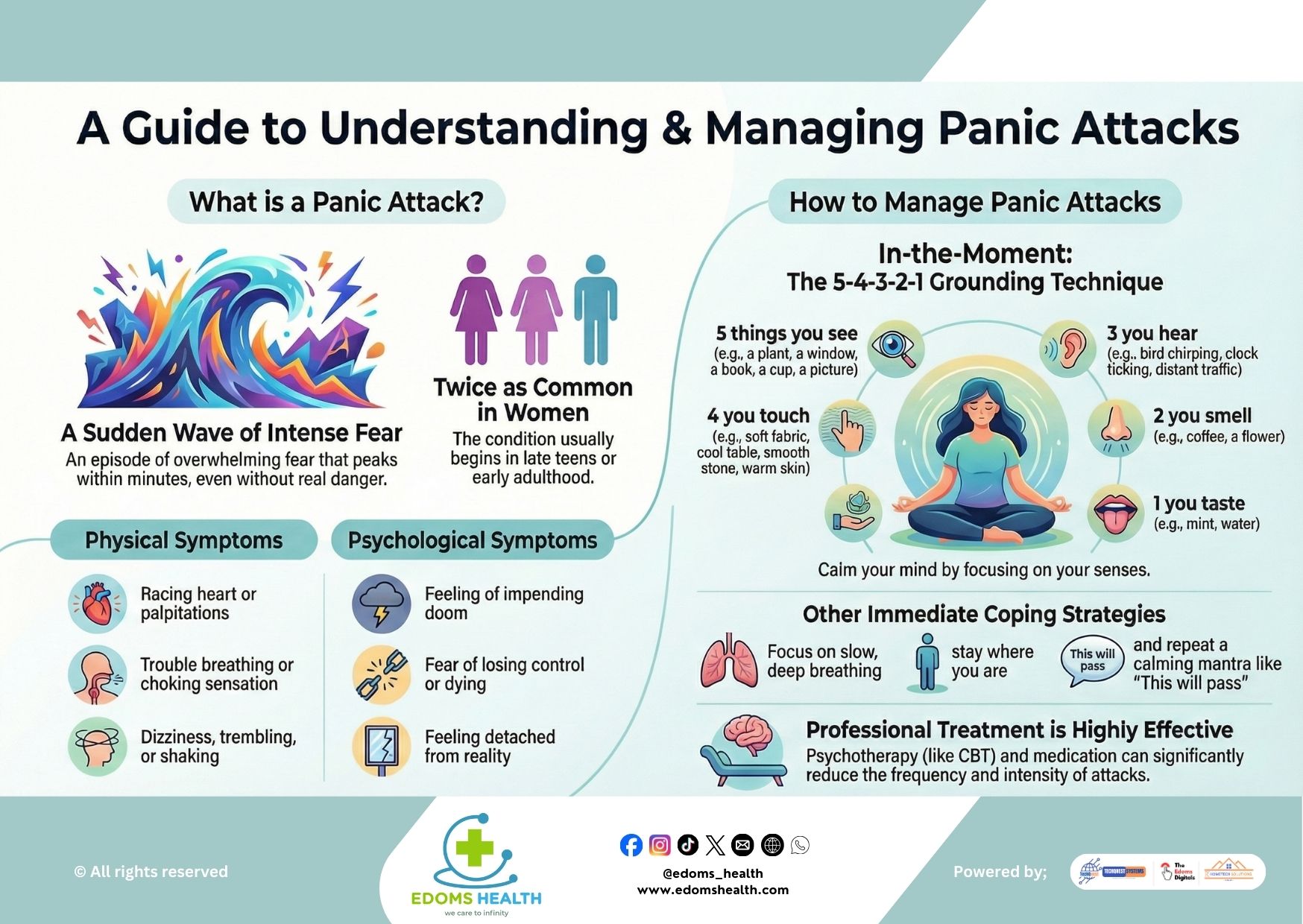
A panic attack is an intense, sudden episode of overwhelming fear and anxiety that can strike without warning, often with no apparent danger. These episodes can be terrifying and disruptive, but with understanding and the right strategies, they can be managed effectively. This guide explores what panic attacks are, how to recognize their symptoms, and offers both immediate and long-term strategies for coping.
What is a Panic Attack?
A panic attack is a sudden wave of intense fear or discomfort that peaks within minutes. Even though there may be no real threat, your body reacts as if there is, triggering a powerful “fight-or-flight” response. Panic attacks can occur unexpectedly or be linked to specific triggers, such as stress, certain situations, or underlying anxiety disorders.
Physical Symptoms:
- Racing heart, palpitations, or chest pain
- Shortness of breath or feeling smothered
- Trembling, shaking, or sweating
- Dizziness, lightheadedness, or feeling faint
- Nausea or stomach discomfort
- Chills or hot flashes
- Numbness or tingling sensations
Psychological Symptoms:
- Sense of impending doom or danger
- Fear of losing control or “going crazy”
- Fear of dying
- Feelings of unreality or detachment from oneself (depersonalization or derealization)
How to Manage a Panic Attack in the Moment
When a panic attack strikes, it can feel all-consuming, but you can regain control with grounding techniques and calming practices.
The 5-4-3-2-1 Grounding Technique
This sensory-based method helps bring your focus back to the present and away from spiraling thoughts:
- 5 things you can SEE – Look around and name five objects (e.g., a lamp, a window, a plant).
- 4 things you can TOUCH – Notice four textures or surfaces (e.g., your shirt fabric, a smooth table, the floor beneath your feet).
- 3 things you can HEAR – Listen for three distinct sounds (e.g., a fan humming, birds outside, your own breathing).
- 2 things you can SMELL – Identify two scents (e.g., the scent of clean laundry, fresh air, or your lotion).
- 1 thing you can TASTE – Focus on one taste (e.g., a mint, a sip of water, or the inside of your mouth).
Other Immediate Coping Strategies:
- Breathe deeply and slowly: Try inhaling for 4 seconds, holding for 4, and exhaling for 6.
- Stay where you are: If possible, don’t run from the situation. Sit down if needed.
- Repeat a calming mantra: Silently or aloud, tell yourself, “This will pass,” “I am safe,” or “I can handle this.”
- Focus on an object: Stare at something steady and describe it in detail in your mind.
- Acknowledge the panic: Remind yourself, “This is just a panic attack—it cannot harm me.”
Long-Term Management and Professional Help
If panic attacks are frequent or interfere with your daily life, professional treatment can make a significant difference.
Psychotherapy
- Cognitive Behavioral Therapy (CBT): Highly effective in treating panic disorder. CBT helps you identify and challenge distorted thoughts, change unhelpful behaviors, and learn coping skills.
- Exposure Therapy: Gradually and safely exposes you to feared sensations or situations to reduce their power over time.
Medication
- Certain antidepressants (SSRIs, SNRIs) or anti-anxiety medications may be prescribed to reduce the frequency and intensity of attacks.
- Medication is often most effective when combined with therapy.
Lifestyle Adjustments
- Regular Exercise: Reduces overall anxiety and improves mood.
- Mindfulness and Meditation: Helps you stay present and reduce reactivity to stress.
- Limit Caffeine and Alcohol: Both can trigger or worsen anxiety.
- Prioritize Sleep: Fatigue can increase vulnerability to panic.
- Join a Support Group: Sharing experiences with others can reduce isolation and provide practical tips.
When to Seek Help
Consider reaching out to a mental health professional if:
- Panic attacks are recurring
- You worry constantly about having another attack
- You avoid places or situations for fear of triggering an attack
- Your daily functioning, work, or relationships are affected
You Are Not Alone
Panic attacks are more common than many people realize, and they do not define your strength or character. With understanding, practice, and sometimes professional guidance, you can learn to manage anxiety and reclaim a sense of calm and control in your life.
If panic feels unmanageable, reach out to a therapist, counselor, or doctor. Help is available, and recovery is possible.
Remember: This feeling is temporary. You have the tools to breathe through it, ground yourself, and move forward.