
 Esau Busuulwa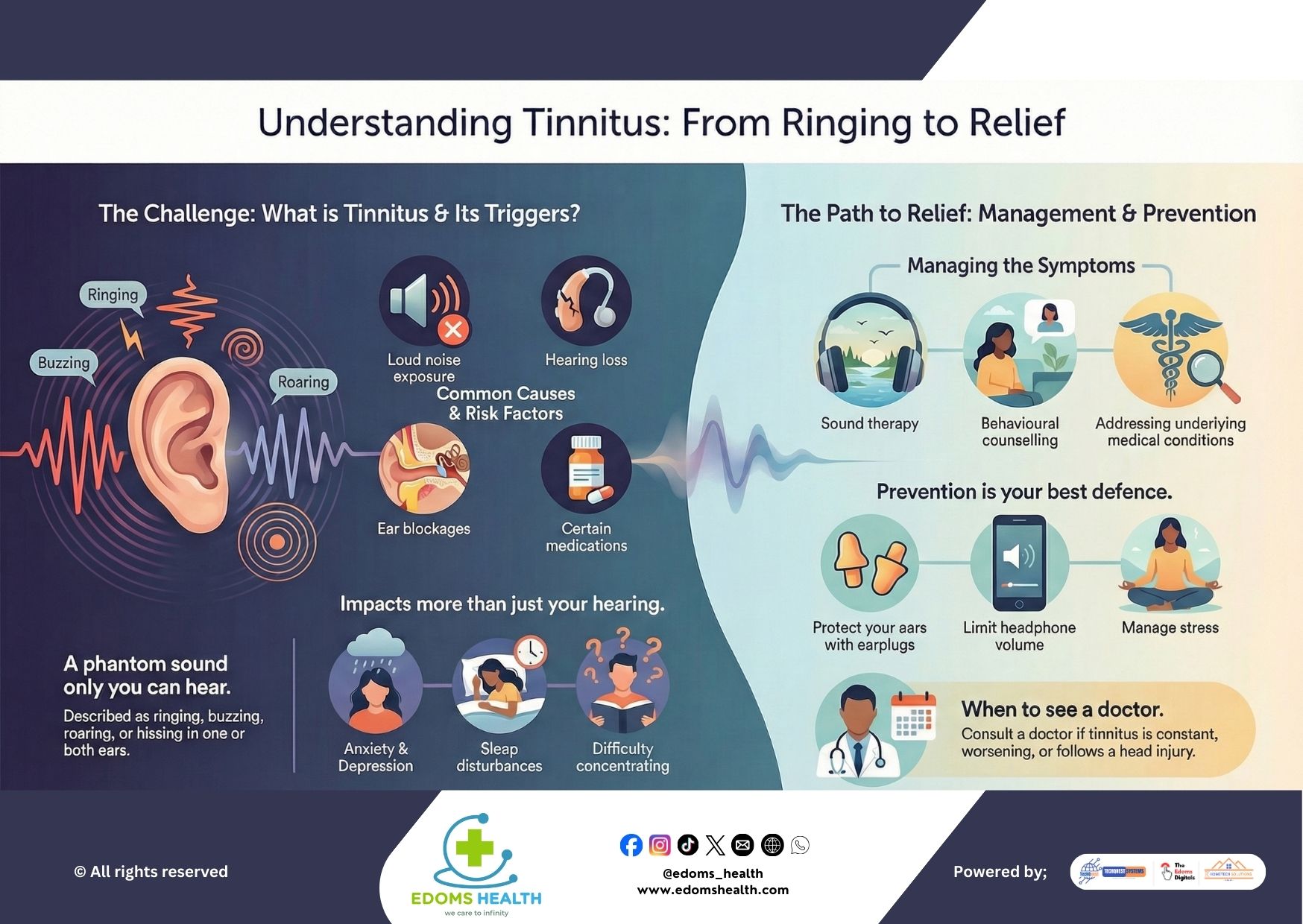
Tinnitus is a common condition characterized by the perception of sound when no external noise is present. Often described as ringing, buzzing, hissing, roaring, or clicking in one or both ears, tinnitus is not a disease itself but a symptom of an underlying condition. While it can be frustrating and disruptive, understanding its triggers and management strategies can help you find relief and improve your quality of life.
What Is Tinnitus?
Tinnitus is often called a phantom sound because only the person experiencing it can hear it. The noise may be intermittent or continuous, and its volume can range from subtle to overwhelming. It is estimated that about 10–15% of adults experience some form of tinnitus.
The Challenge: Common Triggers & Causes
Tinnitus is usually a symptom of an underlying issue, such as:
- Hearing loss (age-related or noise-induced)
- Exposure to loud noise (concerts, machinery, headphones)
- Earwax buildup or blockage
- Ear or sinus infections
- Head or neck injuries
- Certain medications (some antibiotics, cancer drugs, high doses of aspirin)
- Meniere’s disease (inner ear disorder)
- Blood vessel disorders (high blood pressure, atherosclerosis)
- Stress, anxiety, or depression
- Temporomandibular joint (TMJ) disorders
In many cases, the exact cause remains unclear, but identifying potential triggers is a key step in management.
More Than Just a Sound: The Impact of Tinnitus
Tinnitus affects more than just hearing—it can influence many aspects of well-being:
- Sleep disturbances due to noise in quiet environments
- Difficulty concentrating or focusing on tasks
- Increased stress, anxiety, or irritability
- Social withdrawal or avoidance of quiet settings
- Feelings of frustration, helplessness, or depression
Recognizing these emotional and mental health impacts is an important part of holistic care.
The Path to Relief: Management & Prevention
While there is no universal cure for tinnitus, many strategies can help manage symptoms and reduce their impact.
Managing the Symptoms
- Sound Therapy
- Use background noise like white noise machines, fans, or calming music to mask tinnitus sounds, especially at night.
- Hearing aids can amplify external sounds, making tinnitus less noticeable.
- Behavioral Counseling
- Cognitive Behavioral Therapy (CBT) can help change your emotional response to tinnitus and reduce distress.
- Tinnitus Retraining Therapy (TRT) combines sound therapy and counseling to help your brain “ignore” the tinnitus sounds.
- Address Underlying Medical Conditions
- Treat issues like earwax buildup, infections, high blood pressure, or TMJ disorders.
- Review medications with your doctor to see if any could be contributing.
- Lifestyle and Self-Care
- Reduce stress through mindfulness, meditation, yoga, or deep-breathing exercises.
- Limit caffeine, alcohol, and nicotine, as they can worsen symptoms for some people.
- Get regular exercise to improve circulation and reduce stress.
- Prioritize sleep by creating a calming bedtime routine and using sound masking if needed.
Prevention Is Your Best Defense
You can reduce your risk of developing or worsening tinnitus by:
- Protecting your ears with earplugs or earmuffs in loud environments (concerts, construction sites, etc.)
- Limiting headphone volume to safe levels (follow the 60/60 rule: no more than 60% volume for 60 minutes at a time)
- Managing stress through healthy outlets and relaxation practices
- Maintaining cardiovascular health with regular exercise and a balanced diet
When to See a Doctor
Consult a healthcare provider if:
- Tinnitus is constant, sudden, or worsening
- It follows a head injury
- It is accompanied by hearing loss, dizziness, or pain
- It is affecting your sleep, mood, or daily activities
A doctor can perform a hearing test, review your medical history, and possibly refer you to an audiologist or otolaryngologist (ENT specialist) for further evaluation.
Moving Forward with Hope
Tinnitus can be challenging, but it doesn’t have to control your life. With the right combination of sound management, lifestyle adjustments, and professional support, many people find significant relief and learn to live comfortably with tinnitus.
If you’re struggling with persistent tinnitus, don’t hesitate to seek help. Effective strategies and compassionate care are available.
You are not alone in this. With patience, support, and proactive management, relief is within reach.