 Esau Busuulwa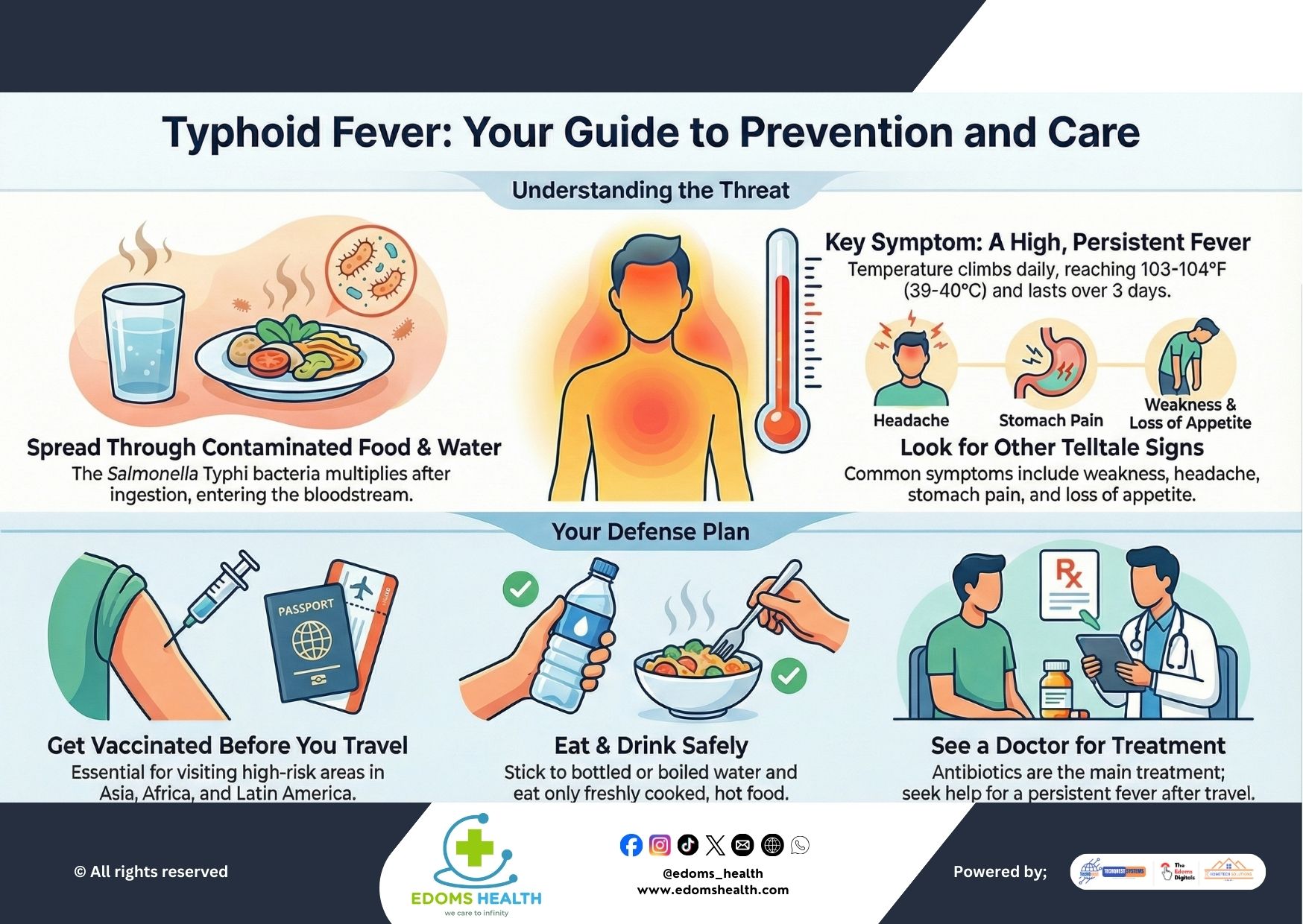
Typhoid fever is a serious bacterial infection caused by Salmonella enterica serotype Typhi. It remains a significant global health concern, especially in regions with limited access to clean water and sanitation. Understanding how it spreads, recognizing its symptoms, and taking preventive measures—especially when traveling—can protect you and your family from this potentially life-threatening illness.
Understanding the Threat
How Typhoid Fever Spreads
Typhoid is transmitted through the fecal-oral route, meaning you can become infected by consuming food or water contaminated with the bacteria. Common sources include:
- Contaminated drinking water
- Raw fruits and vegetables washed in unclean water
- Undercooked or improperly handled food
- Poor hand hygiene in food preparation
Once ingested, the bacteria multiply in the digestive tract and enter the bloodstream, leading to systemic infection.
Key Symptoms
The illness often begins gradually, with symptoms appearing 1–3 weeks after exposure.
- High, Persistent Fever: Temperature rises daily, often reaching 103–104°F (39–40°C), and lasts for more than three days.
- Weakness and Fatigue: Severe tiredness and body aches.
- Headache: Often persistent and severe.
- Stomach Pain and Discomfort: May include constipation or diarrhea.
- Loss of Appetite and Weight Loss
- Rose-colored Spots: Small, flat, pink spots on the chest or abdomen (less common but characteristic)
- Confusion or Delirium: In severe cases, especially if untreated.
If left untreated, typhoid fever can lead to serious complications such as intestinal bleeding, perforation, sepsis, and even death.
Your Defense Plan: Prevention Is Key
1. Get Vaccinated Before You Travel
- Who should get vaccinated: Travelers visiting high-risk areas, including parts of South Asia, Southeast Asia, Africa, and Latin America.
- Types of vaccines: Available in oral and injectable forms, providing protection for several years.
- Timing: Vaccination should be completed at least 1–2 weeks before travel. Consult your healthcare provider for recommendations.
2. Eat and Drink Safely
When traveling to areas where typhoid is common:
- Drink safe water: Bottled, boiled, or chemically treated water only. Avoid ice unless made from safe water.
- Eat hot, cooked food: Ensure food is thoroughly cooked and served hot.
- Avoid raw foods: Steer clear of salads, raw vegetables, unpeeled fruits, and unpasteurized dairy products.
- Practice good hand hygiene: Wash hands frequently with soap and water, especially before eating and after using the bathroom. Use hand sanitizer if soap isn’t available.
- Choose reputable food vendors: Eat at clean, busy establishments where food turnover is high.
3. Maintain Sanitation at Home and in Community Settings
- Ensure access to clean water and proper sewage disposal.
- Promote handwashing and food safety practices in households and public spaces.
Diagnosis and Treatment
When to See a Doctor
Seek medical attention if you:
- Develop a persistent high fever after travel to a high-risk area
- Experience symptoms consistent with typhoid fever
- Have been in close contact with someone diagnosed with typhoid
Diagnosis
- Blood, stool, or urine tests can confirm the presence of Salmonella Typhi.
- Early diagnosis improves outcomes and helps prevent spread.
Treatment
- Antibiotics are the primary treatment. Completing the full course is essential to prevent relapse and antibiotic resistance.
- Supportive care includes staying hydrated, resting, and managing fever and pain with appropriate medications (avoid aspirin, which can increase bleeding risk).
- Hospitalization may be necessary in severe cases, especially if complications arise.
Living in or Visiting Endemic Regions
If you reside in or frequently travel to areas where typhoid is common:
- Stay updated on vaccinations.
- Educate your family about food and water safety.
- Be aware of outbreaks and follow public health advisories.
A Final Word
Typhoid fever is preventable with vaccination and careful attention to food and water safety. Awareness and prompt medical care can greatly reduce the risk of severe illness and complications.
If you plan to travel to a region where typhoid is common, talk to your healthcare provider about vaccination and safe travel practices.
Stay informed, stay prepared, and protect your health—wherever you go.