

 Esau Busuulwa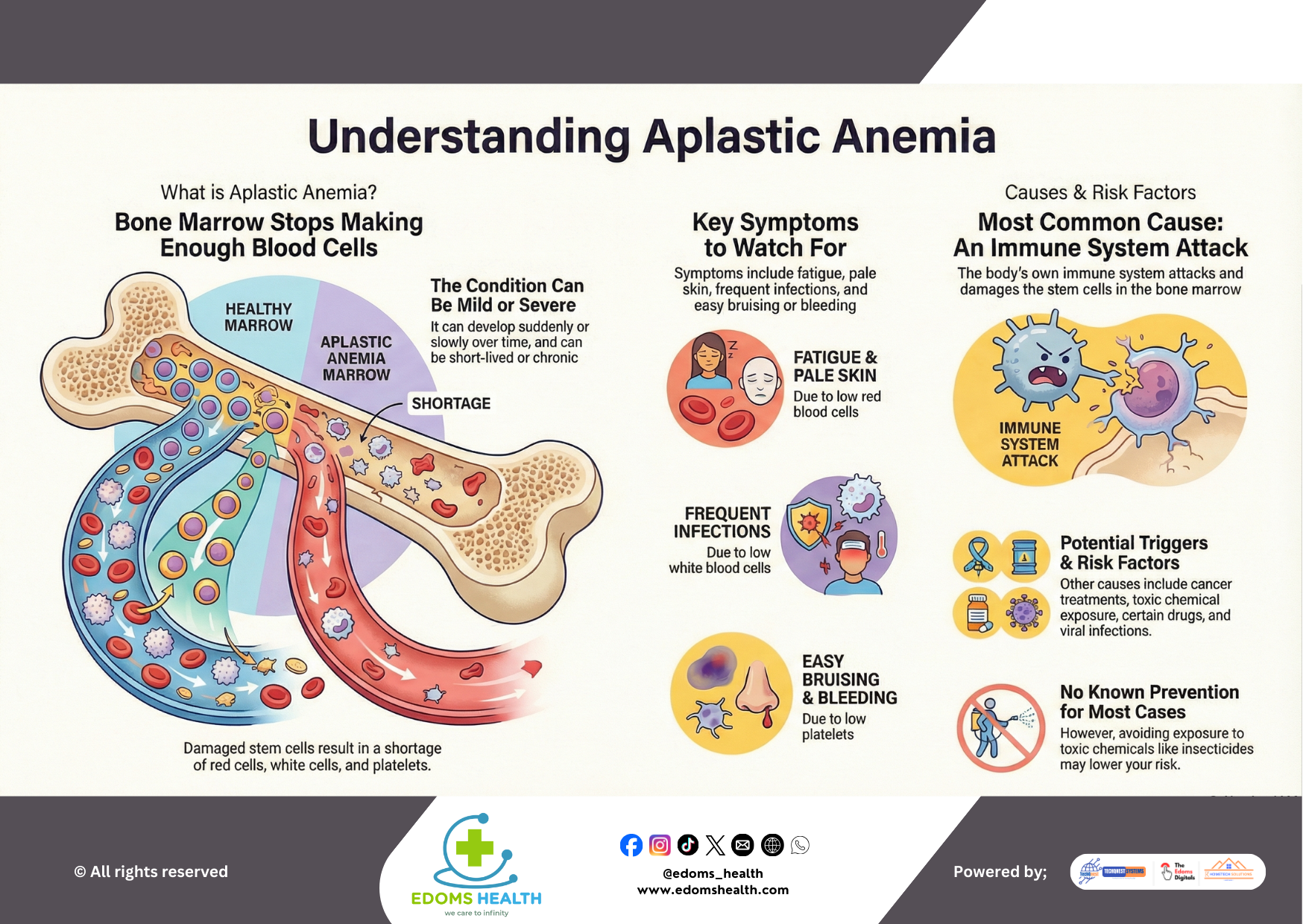
Aplastic anemia is a rare but serious blood disorder that occurs when the bone marrow fails to produce enough new blood cells. This condition can range from mild to severe, develop suddenly or gradually, and may be temporary or chronic. Understanding aplastic anemia is crucial for early recognition and effective management.
What Happens in Aplastic Anemia?
In a healthy individual, bone marrow—the spongy tissue inside bones—produces stem cells that develop into red blood cells, white blood cells, and platelets. In aplastic anemia, these stem cells become damaged, leading to a shortage of all three types of blood cells. This deficiency disrupts the body’s ability to carry oxygen, fight infections, and control bleeding.
Key Symptoms to Watch For
The symptoms of aplastic anemia are directly related to the low levels of blood cells:
- Fatigue and Pale Skin: Caused by a low red blood cell count (anemia), which reduces oxygen delivery throughout the body.
- Frequent Infections: Due to a low white blood cell count (neutropenia), weakening the immune system.
- Easy Bruising and Bleeding: Resulting from a low platelet count (thrombocytopenia), which impairs blood clotting.
These symptoms can appear gradually or suddenly, and their severity often correlates with the extent of bone marrow failure.
Causes and Risk Factors
The most common cause of aplastic anemia is an autoimmune response, where the body’s immune system mistakenly attacks and destroys the stem cells in the bone marrow. However, other factors can also trigger the condition:
- Cancer Treatments: Radiation and chemotherapy can damage bone marrow.
- Toxic Chemical Exposure: Insecticides, benzene, and other industrial chemicals.
- Certain Medications: Some drugs used for rheumatoid arthritis, antibiotics, or anticonvulsants.
- Viral Infections: Such as hepatitis, Epstein-Barr virus, or HIV.
- Genetic Factors: In some cases, inherited conditions like Fanconi anemia may play a role.
Prevention and Outlook
There is no known way to prevent most cases of aplastic anemia, especially those related to autoimmune dysfunction. However, reducing exposure to toxic chemicals, such as insecticides and solvents, may lower the risk. For those undergoing treatments known to affect bone marrow, regular monitoring is essential.
Treatment options depend on severity and may include blood transfusions, immunosuppressive therapy, or bone marrow transplant. Early diagnosis significantly improves the prognosis, making awareness of symptoms and risk factors vital.
If you or someone you know experiences unexplained fatigue, frequent infections, or unusual bruising, consult a healthcare provider for evaluation. With proper medical care, many people with aplastic anemia can manage their condition and maintain a good quality of life.



Your information is greatly appreciated
Thanks very much for the Health updates…