 Esau Busuulwa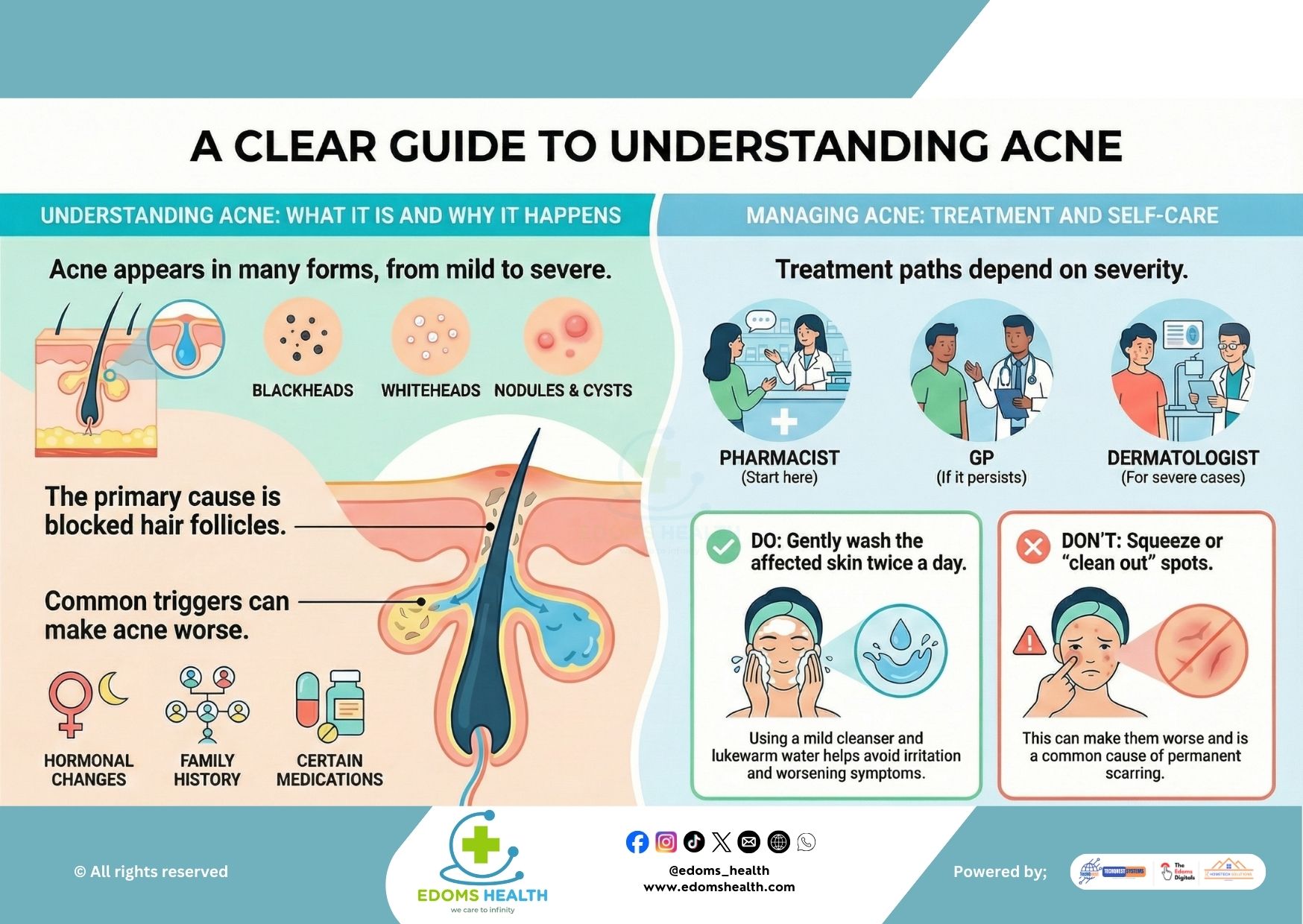
A Clear Guide to Understanding and Managing Acne
Acne is one of the most common skin conditions worldwide, affecting people of all ages but most frequently adolescents and young adults. While often viewed as a simple rite of passage, acne can have a significant impact on self-esteem and quality of life. Understanding what acne is, what triggers it, and how to manage it effectively is the first step toward clearer skin and greater confidence.
Understanding Acne: What It Is and Why It Happens
Acne is a skin condition that occurs when hair follicles become clogged with oil (sebum) and dead skin cells. This creates an environment where bacteria can thrive, leading to inflammation and the formation of various types of blemishes.
Acne appears in many forms, from mild to severe:
- Blackheads: Open clogged pores where the debris oxidizes and turns dark.
- Whiteheads: Closed clogged pores that appear as small, flesh-colored bumps.
- Nodules & Cysts: Large, painful, inflamed lumps beneath the skin’s surface. These are forms of severe acne and carry the highest risk of scarring.
The primary cause is blocked hair follicles. This process is influenced by several key factors:
- Excess Sebum Production: Often driven by hormones.
- Clogged Pores: Dead skin cells that aren’t shed properly.
- Bacteria: Cutibacterium acnes (C. acnes) can multiply in clogged pores.
- Inflammation: The body’s immune response to bacteria and debris.
Common triggers can make acne worse:
- Hormonal Changes: Fluctuations during puberty, menstrual cycles, pregnancy, or due to conditions like PCOS.
- Family History: Genetics play a strong role in your predisposition to acne.
- Certain Medications: Drugs containing corticosteroids, testosterone, or lithium.
- Other Factors: Stress (which can influence hormones), diet (for some individuals), and use of comedogenic (pore-clogging) skincare or haircare products.
Managing Acne: Treatment and Self-Care
Successfully managing acne involves a combination of appropriate treatment and consistent, gentle skincare.
Finding the Right Treatment Path
The right treatment depends largely on the severity and persistence of your acne.
- Start with a Pharmacist: For mild, occasional breakouts, a pharmacist can recommend effective over-the-counter treatments containing ingredients like benzoyl peroxide, salicylic acid, or adapalene gel.
- Consult a GP (General Practitioner): If over-the-counter products aren’t helping, or if you have moderate acne, a doctor can prescribe stronger topical treatments or oral antibiotics to reduce bacteria and inflammation.
- See a Dermatologist: For severe, cystic, or scarring acne that doesn’t respond to other treatments, a skin specialist can offer advanced options like prescription-strength retinoids, hormonal therapies (like birth control pills), or isotretinoin.
Essential Daily Self-Care: The Do’s and Don’ts
How you care for your skin daily is just as crucial as any medication.
DO: Establish a Gentle Routine
- Wash Gently: Cleanse affected skin twice daily (morning and night) and after sweating. Use your fingertips, not a washcloth or scrubber, which can cause irritation.
- Choose the Right Products: Use a mild, non-comedogenic cleanser and lukewarm water. This helps avoid stripping the skin’s natural oils, which can trigger more oil production, and prevents worsening symptoms.
- Moisturize: Even oily skin needs hydration. Use an oil-free, non-comedogenic moisturizer to maintain a healthy skin barrier.
- Use Sun Protection: Many acne treatments increase sun sensitivity. Apply a non-comedogenic sunscreen daily.
DON’T: Engage in Harmful Habits
- Do Not Squeeze or “Clean Out” Spots: Picking, popping, or squeezing pimples may seem satisfying, but it can make them worse and is a common cause of permanent scarring. It pushes bacteria and debris deeper into the skin, leading to more inflammation and longer healing times.
- Avoid Harsh Scrubs: Abrasive exfoliants can tear the skin and worsen acne lesions.
- Don’t Over-Wash: Washing more than twice a day can irritate the skin and exacerbate acne.
Conclusion
Acne is a manageable condition. By understanding its causes—from blocked pores to hormonal triggers—you can make informed decisions about your skincare. Remember to start with a gentle routine, seek professional advice tailored to your acne’s severity, and, above all, resist the urge to pick. With patience and the right approach, achieving clearer, healthier skin is an attainable goal.