 Esau Busuulwa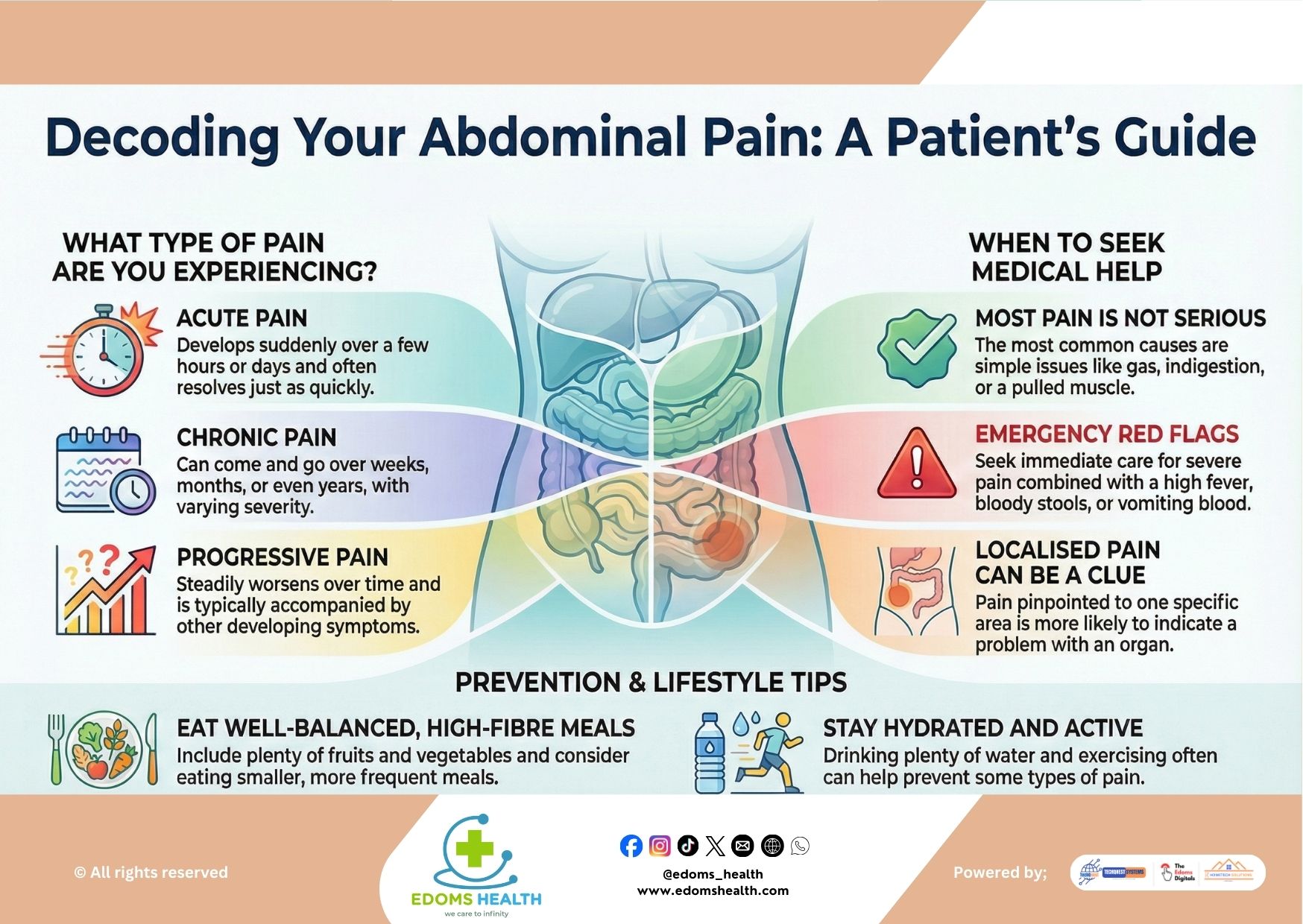
Abdominal pain is a universal human experience, ranging from a mild, fleeting annoyance to a sign of a serious medical emergency. Because the abdomen houses so many vital organs—the stomach, liver, intestines, gallbladder, pancreas, and more—deciphering the message behind the pain is crucial. This guide will help you understand the different types of pain, recognize when to seek help, and learn how lifestyle choices can promote abdominal health.
What Type of Pain Are You Experiencing?
The first step in understanding your abdominal pain is identifying its pattern and character. Categorizing your pain can provide valuable clues about its potential cause.
- Acute Pain: This pain develops suddenly over a few hours or days and often resolves just as quickly. It’s the “sharp, new” pain that grabs your attention. Common causes include gastroenteritis (“stomach flu”), gas, indigestion, or minor infections. While often not serious, acute pain can sometimes be the first sign of an urgent condition like appendicitis.
- Chronic Pain: This type of pain can come and go over weeks, months, or even years, with varying severity. It is persistent or recurrent. Conditions like irritable bowel syndrome (IBS), food intolerances (e.g., lactose intolerance), chronic constipation, or inflammatory bowel disease (IBD) often manifest as chronic abdominal pain.
- Progressive Pain: This is a pain that steadily worsens over time and is typically accompanied by other developing symptoms, such as unexplained weight loss, changes in bowel habits, or persistent nausea. Progressive pain is a significant red flag that should always be evaluated by a doctor, as it can indicate conditions that need medical intervention.
When to Seek Medical Help
Navigating when to tough it out and when to call a doctor is a common dilemma. Use this framework to guide your decision.
Most Pain Is Not Serious
It’s important to remember that the most common causes are simple, benign issues like gas, indigestion, a pulled muscle, or mild food sensitivity. Brief, mild pain that resolves on its own or with simple remedies (like antacids or rest) usually doesn’t require urgent care.
Emergency Red Flags: Seek Immediate Care
Certain symptoms, when combined with severe abdominal pain, signal a potential medical emergency. Go to an emergency room or call for help if you experience severe pain alongside:
- High fever
- Bloody or black, tarry stools
- Vomiting blood or material that looks like coffee grounds
- Inability to pass stool, especially with vomiting
- Pain so severe you cannot sit still or find a comfortable position
- A rigid, hard abdomen that is tender to touch
- Signs of shock: dizziness, lightheadedness, rapid heartbeat, or shallow breathing
Localised Pain Can Be a Clue
Pay attention to where the pain is centered. Pain pinpointed to one specific area is more likely to indicate a problem with a particular organ.
- Upper Right Quadrant: May point to gallbladder or liver issues.
- Upper Middle (Epigastric): Often related to the stomach, esophagus, or pancreas.
- Upper Left Quadrant: Could be linked to the stomach, spleen, or pancreas.
- Lower Right Quadrant: A classic sign of possible appendicitis.
- Lower Left Quadrant: Often associated with the colon (e.g., diverticulitis).
- Generalized Pain: Pain spread over more than half the abdomen is more typical of a viral infection, gas, or indigestion.
Prevention & Lifestyle Tips
While not all abdominal pain can be prevented, a healthy lifestyle can significantly reduce the frequency and severity of common digestive issues.
1. Eat Well-Balanced, High-Fibre Meals
A diet rich in fiber helps maintain regular bowel movements and prevents constipation, a common cause of abdominal discomfort.
- Action Step: Include plenty of fruits, vegetables, whole grains, and legumes in your diet.
- Consider eating smaller, more frequent meals instead of three large ones to avoid overloading your digestive system and to help manage conditions like acid reflux.
2. Stay Hydrated and Active
Water is essential for digestion, helping to dissolve fats and soluble fiber and preventing constipation. Regular exercise keeps your digestive tract moving.
- Action Step: Drink plenty of water throughout the day. Limit sugary drinks and excessive caffeine.
- Engage in regular, moderate exercise like walking, swimming, or cycling for at least 30 minutes most days.
3. Manage Stress and Listen to Your Body
Stress and anxiety can directly impact your gut, exacerbating conditions like IBS. Pay attention to how your body reacts to different foods and situations.
- Action Step: Incorporate stress-reduction techniques such as deep breathing, meditation, or yoga into your routine.
- Keep a simple food and symptom diary if you have recurrent pain to identify potential triggers.
Conclusion
Abdominal pain is a signal from your body, not a diagnosis in itself. By learning to decode its type, location, and accompanying symptoms, you empower yourself to respond appropriately—whether that means simple at-home care or seeking timely medical attention. Remember, when in doubt, or when faced with any severe or persistent symptoms, it is always wise to consult with a healthcare professional for an accurate diagnosis and peace of mind.