
 Esau Busuulwa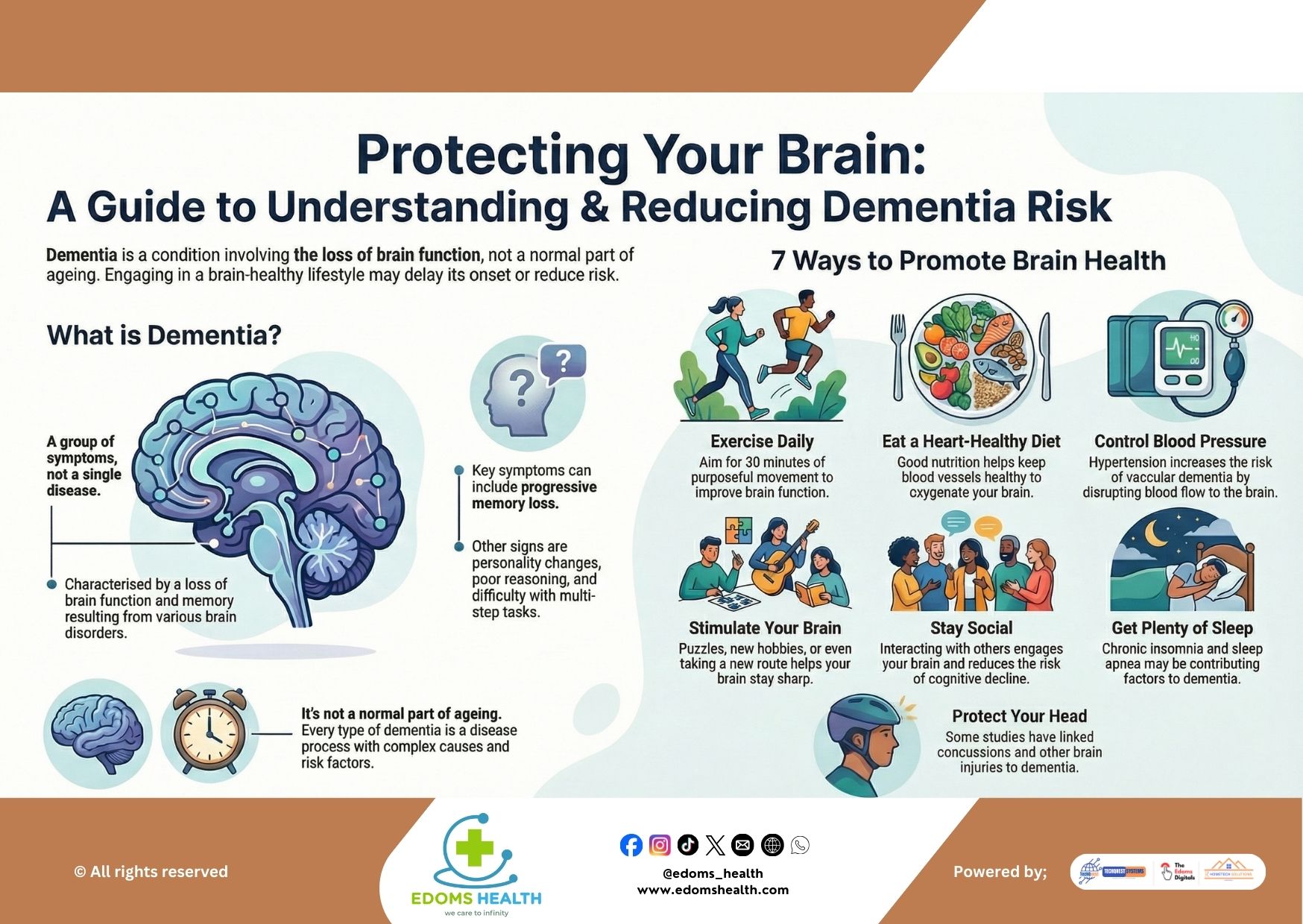
Dementia is often misunderstood as an unavoidable part of aging. In truth, it is not a normal stage of growing older, but a significant medical condition marked by the loss of brain function. While there is no surefire way to prevent dementia, research shows that certain lifestyle choices can play a powerful role in delaying its onset and reducing your risk. Understanding what dementia is—and what you can do to promote long-term brain health—is one of the most important steps you can take for your future well-being.
What Is Dementia?
Dementia is not a single disease, but rather a group of symptoms caused by various disorders that affect the brain. It involves a decline in cognitive abilities—such as memory, reasoning, and communication—that is severe enough to interfere with daily life. Alzheimer’s disease is the most common cause, but other types include vascular dementia, Lewy body dementia, and frontotemporal dementia.
Importantly, dementia is not a normal part of aging. While age is a risk factor, every form of dementia is the result of a disease process with complex genetic, environmental, and lifestyle components.
Key Symptoms to Recognize
- Progressive memory loss, especially of recent events
- Difficulty with language, such as finding words or following conversations
- Impaired judgment and poor reasoning skills
- Personality changes, mood swings, or social withdrawal
- Trouble performing familiar, multi-step tasks like cooking or managing finances
If you or a loved one are experiencing these changes, it’s important to speak with a healthcare provider for a thorough evaluation.
7 Ways to Promote Brain Health and Reduce Dementia Risk
You can take proactive steps today to support your brain’s health for years to come. Research in neuroscience and public health consistently highlights the following strategies:
1. Exercise Daily
Physical activity increases blood flow to the brain, supports the growth of new brain cells, and improves overall brain function. Aim for at least 30 minutes of purposeful movement most days—whether it’s walking, cycling, swimming, or strength training.
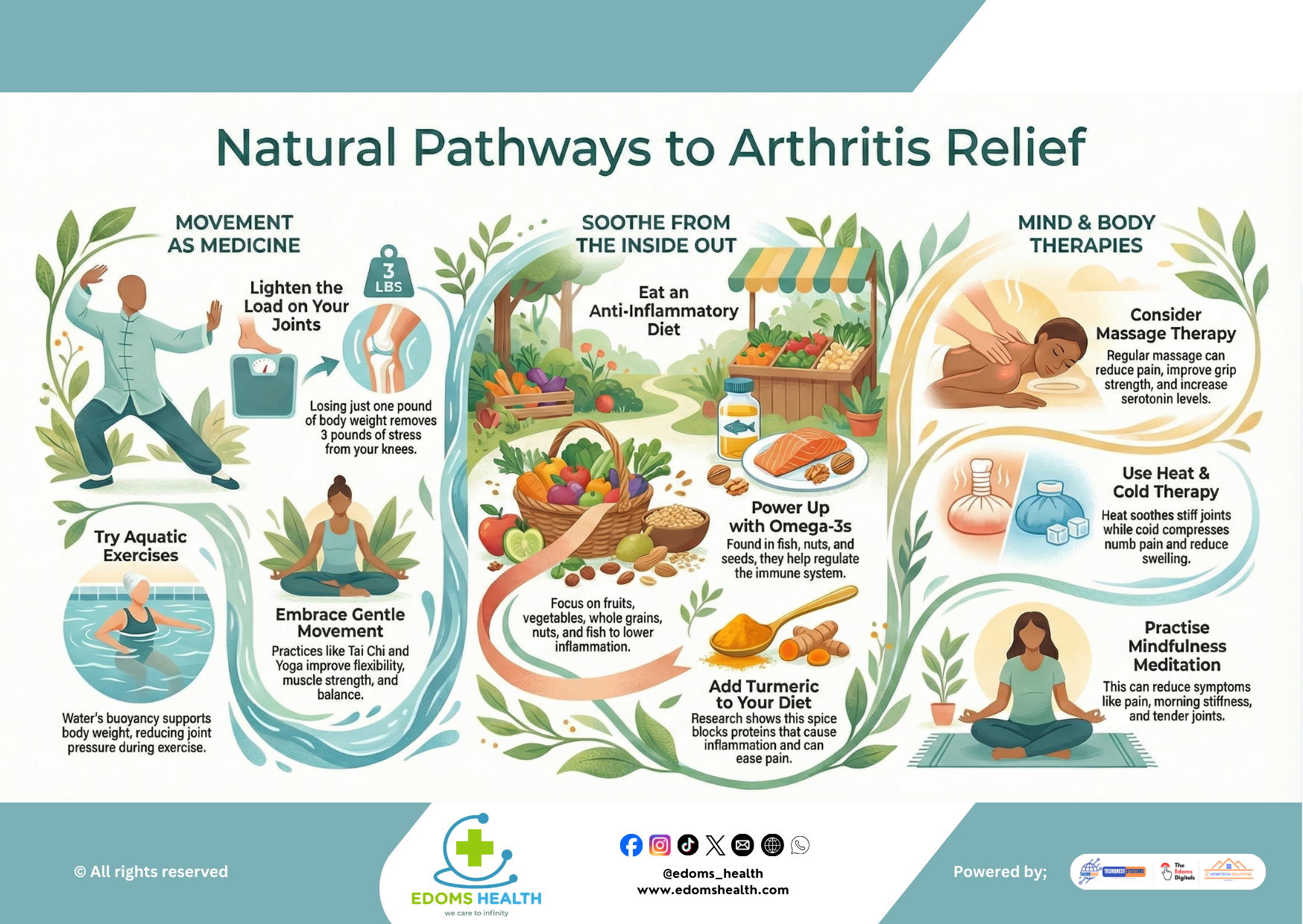
2. Eat a Heart-Healthy Diet
A nutritious diet isn’t just good for your body—it fuels your brain. Focus on:
- Plenty of fruits, vegetables, and whole grains
- Healthy fats like those in nuts, seeds, olive oil, and fatty fish
- Limited intake of processed foods, sugar, and saturated fats
Diets like the Mediterranean or MIND diet have been linked to lower dementia risk.
3. Control Blood Pressure
Hypertension can damage blood vessels in the brain, increasing the risk of vascular dementia. Regular check-ups, medication if needed, and lifestyle modifications like reducing salt intake can help keep your blood pressure in a healthy range.
4. Stimulate Your Brain
Keeping your mind active builds “cognitive reserve,” which may help your brain compensate for changes related to dementia. Engage in activities like:
- Puzzles, crosswords, or Sudoku
- Learning a new skill or language
- Reading, writing, or playing a musical instrument
- Changing daily routines—take a different route, use your non-dominant hand, etc.
5. Stay Social
Social interaction engages multiple areas of the brain and can protect against cognitive decline. Make time for friends, join clubs or community groups, volunteer, or stay connected through regular calls and visits.
6. Get Plenty of Sleep
Chronic sleep problems—including insomnia and sleep apnea—have been linked to an increased risk of dementia. Aim for 7–9 hours of quality sleep per night and seek treatment for sleep disorders if needed.
7. Protect Your Head
Head injuries, especially repeated concussions, are associated with a higher risk of certain dementias. Wear seatbelts, use helmets during sports, and take steps to prevent falls, particularly as you age.
A Final Word on Prevention and Hope
While not all risk factors for dementia are within our control—such as age, genetics, and family history—many are. By adopting a brain-healthy lifestyle, you are not only potentially lowering your risk of dementia but also improving your overall physical and mental health.
It’s never too early or too late to start making positive changes. Small, consistent steps toward better health can have a lasting impact on your brain’s resilience and vitality.
If you have concerns about memory changes or dementia risk, talk to your doctor. Early assessment and intervention can provide clarity, support, and a path forward.
Your brain is worth protecting—invest in it every day.